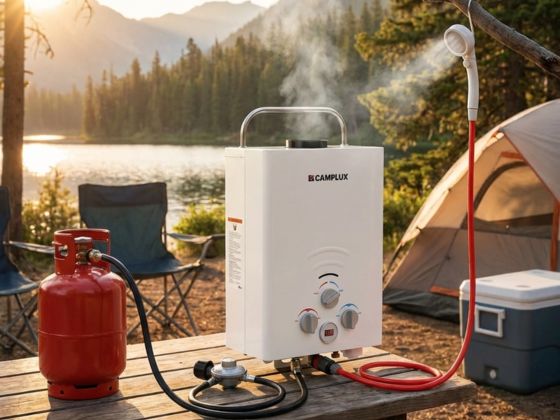
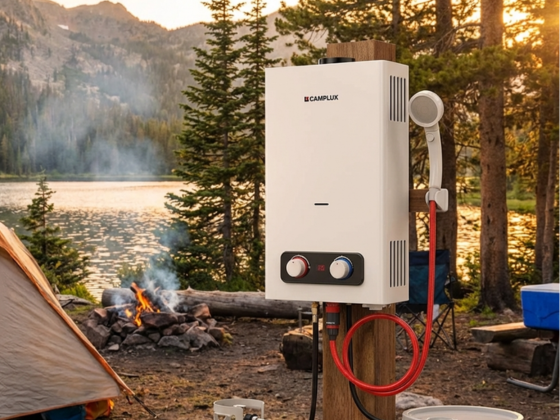
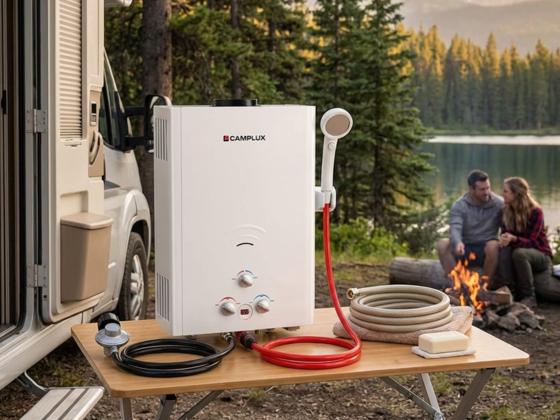
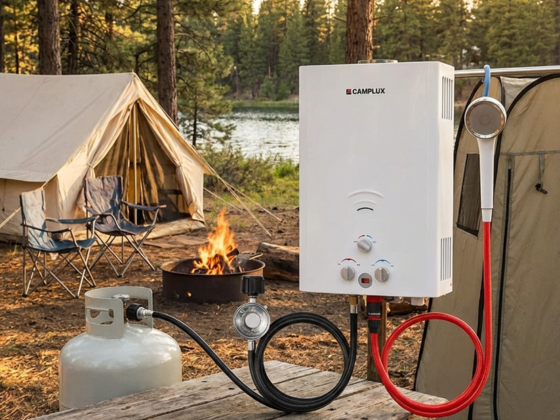
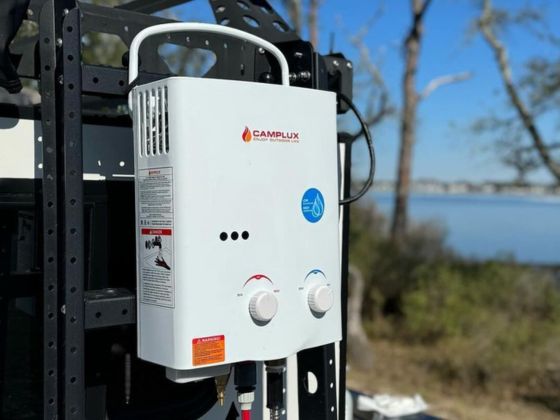

Affordable camping water heaters in Canada typically run CAD $80–$270, while premium models range from CAD $300–$600+. For most solo campers or weekend trippers, a mid-range propane unit delivers reliable hot water without overspending. But if you're running a family campsite, an off-grid RV setup, or you camp through Canadian shoulder seasons, a higher-spec unit often pays back the price difference in comfort and durability.
So which tier actually fits your situation? Fair question — the answer depends on how often you camp, how many people you're heating water for, and whether you're pulling from a pressurized line or a bucket.
Buyers often evaluate two things first: flow rate and ignition reliability. A unit that sputters at 3.0 PSI startup pressure is useless if your only water source is a gravity-fed jug. And a high-BTU heater that needs shore power to ignite doesn't belong in the backcountry. The Camplux AY132 1.32 GPM portable heater and the Camplux Nano 3 Max sit at opposite ends of that spectrum — both worth understanding before you spend anything.
Understanding Canadian Price Tiers for Camping Water Heaters
The Canadian market splits fairly cleanly into three bands. Entry-level propane portable heaters — think 1.32–1.58 GPM output, battery ignition, no digital display — typically land between CAD $80 and $270. Mid-range units with digital temperature control, higher flow rates around 2.6 GPM, and wider compatibility with low-pressure water sources sit from $270 to $400. Premium models with real-time temperature displays, 3.0+ GPM output, wide temperature ranges (50–122°F), and complete pump packages push past $400 and up to $590.
According to the Camplux portable water heater buyer's guide, entry-level propane setups start around CAD $80–120, with mid-range digital models running $150–$250 before you add pump accessories. That's a meaningful spread — and picking the wrong end of it costs you either in cold showers or in money spent on specs you'll never actually use.
The pricing also reflects real engineering differences, not just branding. A unit at $589 like the Nano 3 Max includes overheat protection, power-level display, and a broader operating temperature range than a $239 AY132. Whether those differences matter depends entirely on your camping style.
One risk to check: some buyers see a low sticker price and assume the product will handle any condition. In practice, a 1.32 GPM unit works fine for a quick outdoor rinse but struggles if two people need full showers after a long hike. Knowing your actual demand before buying saves the headache of returning and reordering.
Key Benefits of Each Budget Category
Affordable models have one major advantage that premium units can't replicate: simplicity. Lighter weight, faster setup, fewer things to go wrong. The Camplux BW158B weighs just 13 lbs, folds for transport, and runs on a standard propane cylinder with no complicated connections. For a solo camper heading into the Algonquin backcountry for a weekend, that's exactly what you need.
Premium units earn their price through output range and environmental resilience. The Nano 3 Max runs across a 50–122°F applicable range with overheat cutoff at the top end. That matters in BC's shoulder season when morning inlet water temperatures can sit near 5°C — a budget unit may simply fail to raise that water to a comfortable temperature, not because it's defective, but because it was never specced for that scenario.
Mid-range models like the Camplux BW264G at $369.99 offer a digital display and 2.64 GPM flow — enough for a proper camp shower — while staying well under the premium threshold. For most family campers, this is the sweet spot. You get real temperature feedback without paying for features you'd only use in extreme conditions.
Worth noting: the gap between affordable and premium narrows considerably when you factor in accessories. A $239 base unit plus a separately purchased pump and strainer can easily reach $320–$350. Some premium kits bundle everything. Always compare total setup cost, not just the heater price tag.
Head-to-Head Comparison: Affordable vs Premium Models
The table below covers six Camplux models across the full price spectrum. These represent the real decision points Canadian buyers face, from a basic propane unit to a full-featured portable system.
| Model | Price (CAD) | Flow Rate | BTU Output | CSA Approved | Digital Display | Min. Start Pressure | Best For |
|---|---|---|---|---|---|---|---|
| AY132 (White) | $239.99 | 1.32 GPM | Verify spec sheet | Yes | No | Standard | Solo campers, light use |
| BW158B (Black) | $269.99 | 1.58 GPM | 41,000 BTU | Verify spec sheet | No | Standard | Weekend camping, pets, rinsing |
| AY132P43 (Off-Grid Kit) | $299.99 | 1.32 GPM | Verify spec sheet | Yes | No | 3.0 PSI | Off-grid RV, gravity/pump fed |
| BW264G (Gray) | $369.99 | 2.64 GPM | Verify spec sheet | Verify spec sheet | Yes | Standard | Families, camp showers |
| BW422G (16L Gray) | $539.99 | 4.22 GPM | Verify spec sheet | Verify spec sheet | Yes | Standard | Heavy use, semi-permanent setups |
| Nano 3 Max | $589.99 | 3.0+ GPM | Verify spec sheet | Verify spec sheet | Yes (real-time temp) | Standard | Multi-season, feature-priority users |
If you prioritize low startup pressure for off-grid use, the AY132P43 at $299.99 fits best. If you want the highest flow rate in the lineup without jumping to the Nano 3 Max's price point, the Camplux BW422G at 4.22 GPM is worth a close look — View product details to confirm current availability and shipping timelines.
Who Is This For?
Affordable models (CAD $80–$270) suit solo campers, occasional weekend users, and people who primarily need hot water for washing dishes, rinsing gear, or one quick outdoor shower. If you camp 3–5 times a year and usually access maintained campgrounds with decent water pressure, you don't need to spend $500+.
Mid-range models ($270–$400) fit small families, van-lifers on a budget, and RV users who camp regularly but don't operate in extreme temperature conditions. The digital display in units like the BW264G makes temperature adjustment genuinely easy, which matters when you're managing hot water for kids.
Premium models ($400–$590+) are built for multi-person households on extended trips, four-season campers, or anyone running a setup where hot water reliability is non-negotiable. The Nano 3 Max with its 50–122°F operating range is a different category of tool. It's not for everyone, but for the right buyer it removes every cold-shower risk from the equation.
A common decision concern is compatibility with existing setups. If you already own a Camplux 12V water pump, you can pair it with most of the mid-range and entry-level units without buying additional hardware. That changes the total cost calculation meaningfully.
How to Choose the Right Option
Start with flow rate math. A standard shower head runs around 1.5–2.5 GPM. If your camping shower head uses 1.8 GPM and your heater maxes out at 1.32 GPM, you'll get a trickle of warm water, not a real shower. That gap is where budget units fall short for shower-focused use, and it's the single most common mismatch buyers run into.
Next, check your water source. Pressurized campground hookup? Most units work fine. Pulling from a river with a 12V pump, or running a gravity-fed jug? You need a heater rated for low-pressure startup, specifically 3.0 PSI or lower. The CSA-approved AY132P43 is designed exactly for that scenario and comes with compatibility confirmed for the Camplux 12V 1.2 GPM pump — no guessing required.
After testing several options across different setups, the pattern is clear: buyers who skip the flow rate check are the ones who return products. Matching GPM to your actual shower head and water source saves you that hassle entirely.
Quick tip: sort out your propane situation before ordering. A 1 lb disposable cylinder gets you through a weekend; longer trips need a bigger tank with a proper regulator. Most Camplux portable units include a regulator in the box, but confirm what's included in the specific kit you're buying, especially for bundled packages like the BW158BP60 kit which ships with a 1.6 GPM pump and strainer pre-included.
CSA Certification and Canadian Safety Standards: What Actually Matters
CSA certification is not optional for propane appliances sold in Canada. The CSA Group certifies gas appliances to standards including CSA B149.1 (Natural Gas and Propane Installation Code), and portable water heaters sold for the Canadian market should carry CSA approval confirming they meet those requirements. Products without it may not be covered under Canadian insurance policies if something goes wrong.
Several Camplux units explicitly carry CSA approval for the US and Canada markets — including the AY132 series and the AY132P43. For units where the product listing says "verify spec sheet," that's the right approach: check the current product page or contact customer support before purchasing, rather than assuming certification from a photo or description.
Here's something that trips people up: CSA certification on a propane camping heater is about safety — flame failure devices, anti-freezing protection, overheat shutoff — not energy efficiency ratings. The ENERGY STAR Canada program applies to fixed water heaters for home use, not to portable propane camping units. So if you see a portable camping heater advertised with ENERGY STAR branding, that's worth scrutinizing carefully.
For buyers in Ontario, BC, or Quebec, provincial installation codes (OBC, BC Building Code, Quebec Construction Code) apply to permanently installed gas appliances, not to portable camping equipment. So for a portable propane camping heater used outdoors, the relevant check is CSA product certification, not provincial install code compliance. That simplifies the buying decision considerably.
Real-World Scenarios: When Budget Wins, When Premium Pays Off
Scenario one: a solo paddler heading into Northern Ontario for five days, pulling water from a lake with a battery pump. Weight matters. Complexity is a liability. A 13 lb unit like the BW158B that runs on a single D-cell battery ignition and a 1 lb propane canister is genuinely the right tool. Spending $350 more for a digital display and wider temperature range adds zero value here.
Scenario two: a family of four running a trailer setup in BC's Interior from May through October. Two adults and two kids need real showers. Morning inlet water in May can be cold. They're parked for multi-day stretches, not moving daily. For them, a unit that struggles below 10°C inlet temperature creates a real problem. The Nano 3 Max's wider operating range and real-time temperature display earns its $589.99 price in that context. For a direct comparison of how Camplux portable models stack up against each other and competing brands, the Camplux vs Onsen portable water heater comparison covers that ground in detail.
Scenario three: a couple doing van life across Canada on a tight budget. They need hot water daily but can manage with 1.5–2 GPM if it's consistent. The AY132P43 at $299.99, paired with a 12V pump, gives them CSA-approved reliability with low-pressure startup compatibility. That's a complete functional system under $350 total. Not premium. Works every day.
If there's one thing that comes up again and again in real-world use, it's this: buyer regret almost never comes down to price. It comes down to mismatched flow rate or the wrong ignition type for the water source. Nail those two things, and almost any tier delivers good value. If you want a broader overview of the top-performing models for Canadian conditions, the top camping water heaters for the Canadian wilderness guide covers durability and performance testing across conditions.
Which One Should You Choose?
For solo or occasional campers who need a lightweight, portable unit for basic hot water use, the AY132 or BW158B in the $239–$270 range delivers reliable performance without unnecessary complexity. CSA certification, simple ignition, and a compact form factor cover most weekend camping needs in Canada. Overspending on premium features for 3–5 trips a year isn't a smart trade.
For families, van-lifers, and regular campers who want proper shower capacity and temperature control, the BW264G at $369.99 hits the practical sweet spot. The 2.64 GPM flow rate handles two people showering in sequence. The digital display removes the guesswork from temperature adjustment. And it stays well below the premium tier without sacrificing day-to-day usability. If you're in this buyer profile, View product details to check current stock and shipping estimates for your province.
For multi-season campers, BC or Alberta shoulder-season users, or anyone who simply can't afford a cold-shower failure on a trip, the Nano 3 Max or BW422G at $539–$590 provides the output range and safety features to handle genuinely challenging conditions. That tier makes sense when hot water isn't a nice-to-have but a daily operational requirement. Check the best times to buy tankless water heaters in Canada to time your purchase for the best available pricing.
| Buyer Profile | Recommended Model | Price (CAD) | Key Reason |
|---|---|---|---|
| Solo / occasional camper | AY132 / BW158B | $239–$270 | Lightweight, simple, CSA-approved |
| Off-grid RV / trailer | AY132P43 | $299.99 | 3.0 PSI startup, pump compatible |
| Family camper / van-lifer | BW264G | $369.99 | 2.64 GPM, digital display, value |
| Multi-season / heavy use | BW422G / Nano 3 Max | $539–$590 | High output, wide temp range |
Frequently Asked Questions
Do affordable camping water heaters work in cold Canadian weather?
Entry-level propane units can struggle when inlet water temperatures drop below 5–8°C, which is common in Canadian spring and fall camping. The heater's BTU output has to work much harder to raise cold water to a comfortable temperature, and low-end models may not have the thermal headroom to do it well. If you're camping through October in Alberta or BC, check the manufacturer's spec sheet for minimum inlet temperature ratings before buying an affordable unit.
What warranty does Camplux offer on portable water heaters?
Warranty terms vary by model, so you'll want to confirm directly on the product page or through Camplux customer support before purchasing. For B2C purchases, also check the returns policy — understanding whether a unit can be returned within a trial window matters if you're buying for a trip and haven't had a chance to test it at home first. Camplux ships from Canadian stock for many models, which also affects return logistics compared to cross-border orders.
Is a higher GPM flow rate always better for camping?
Not necessarily. A 4.22 GPM unit like the BW422G pulls propane faster and requires more water pressure to activate. If your camp setup uses a small 12V pump or a gravity-fed tank, that higher flow rate becomes a liability rather than an asset. Match your flow rate to your actual water delivery capacity. For most portable pump setups, 1.32–2.64 GPM is the practical range — and anything above that needs a pump rated to keep up.
Can I use a camping water heater indoors in my RV or cabin?
Propane portable units designed for outdoor use should not be operated in enclosed spaces without proper venting — carbon monoxide accumulation is a serious risk. If you need an indoor-capable unit, look specifically at models rated for indoor use with appropriate venting, like those compatible with the Camplux 3" horizontal vent pipe kit. For electric alternatives in cabins or small spaces, the Camplux mini tank electric heater range is worth considering instead.
How do I compare total cost between an affordable kit and a premium bundle?
Add up everything you need to get hot water running: the heater, a water pump (if your source isn't pressurized), a strainer, gas regulator, and shower head. A $239 base heater that requires a separate $49 pump and $30 strainer costs $318 all-in — which overlaps significantly with a bundled mid-range unit. The BW158BP60 kit at $339.99, for example, ships with the pump and strainer pre-included. Always calculate system cost, not just unit price.
Where can I find buyer reviews for Camplux portable water heaters in Canada?
Product-specific ratings and reviews are listed on each Camplux product page at camplux.ca. For independent third-party coverage, the Portable Water Heater Buying Guide from The Examiner benchmarks multiple models including the AY132 across price tiers, which gives useful context beyond any single brand's own listings. Cross-referencing both sources gives you a fuller picture before committing.