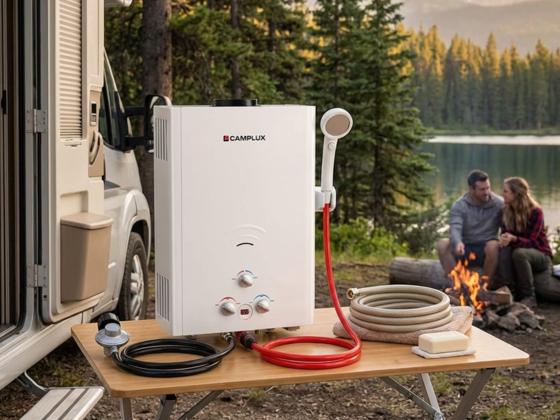
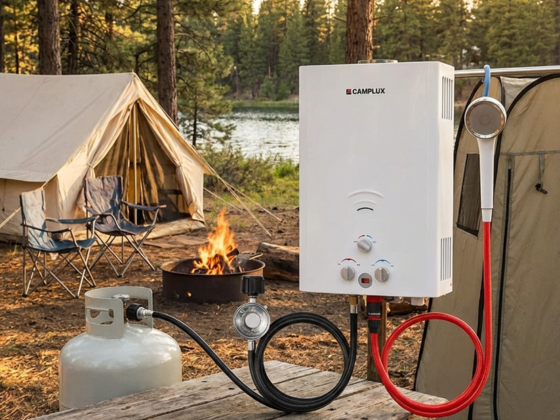
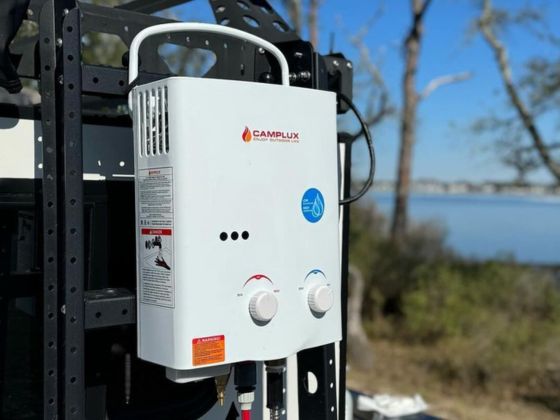
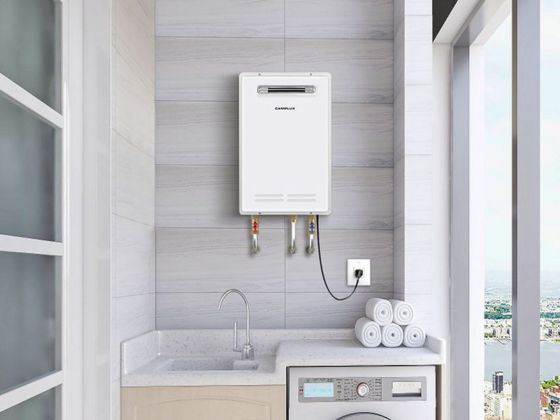
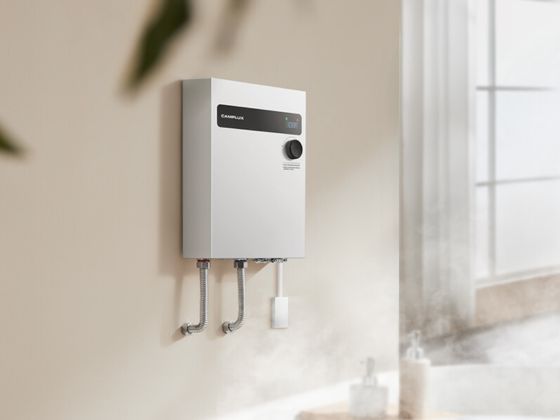

Camping water heaters suited for Canadian wilderness need to handle cold inlet temperatures, low-pressure water sources, and unpredictable weather. The strongest options in 2026 are propane-powered tankless units with CSA approval, BTU outputs between 41,000 and 68,000, and low-pressure startup under 3.5 PSI. Prices range from roughly C$239 to C$590 depending on flow rate and features.
So which one actually holds up when you're camping in northern Ontario in September, drawing water from a lake at 10°C? That's the real question. A spec sheet won't tell you that.
If you're comparing the Camplux AY132 against something like the BW264G or the Nano 3 Max, you'll find meaningful differences in flow rate, minimum pressure, and cold-weather performance. We break all of it down below. And if you're also looking at the broader propane heater landscape for Canada, the Best Portable Propane Water Heaters for Camping Canada 2026 guide covers the wider market.
What to Look for in a Camping Water Heater for Canada
Canadian wilderness camping puts gear through conditions that most product reviews skip entirely. Inlet water temperatures in spring or fall can sit at 5–12°C. Backcountry water sources deliver low, inconsistent pressure. And at elevation or in wind, flame stability matters more than it does in a backyard.
The first number to check is minimum startup pressure. Most heaters need 4–6 PSI to ignite. But if you're drawing from a lake with a 12V pump, you may only generate 3 PSI. Models like the Camplux AY132P43 are built specifically for this, starting at just 3.0 PSI — and that single spec can save you a very cold morning.
BTU output is the other critical factor. A higher BTU rating means the heater can raise cold water temperature more aggressively. For Canadian fall camping, where your inlet water might be 8°C and you want a 38°C shower, you need a heater with enough output to bridge that 30-degree gap at a reasonable flow rate. Units in the 41,000–68,000 BTU range cover this for most scenarios.
Don't skip the safety certifications. CSA approval (under standards like CSA B149.1 for gas appliances) means the unit's been independently tested for safe gas operation — and plenty of campgrounds in Canada have explicit rules about propane appliances meeting that standard. It's easy to overlook until you're turned away at the gate.
Key Benefits of Portable Propane Tankless Heaters
No tank to fill, no preheat time, and no wasted fuel keeping water hot while you're hiking. That's the basic pitch for tankless design. But the benefits go further in a camping context.
Propane tankless heaters ignite on-demand, so you get hot water within a few seconds of turning on the tap. There's no waiting for a storage tank to heat up. For a two-person camping trip where one person showers while the other does dishes, that kind of instant availability matters. According to Natural Resources Canada's Water Heater Guide, operating cost is as real a factor as purchase price, and tankless units score well here because they only burn fuel when water is actively flowing.
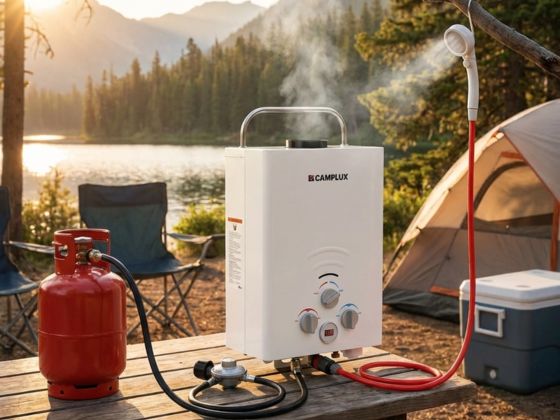
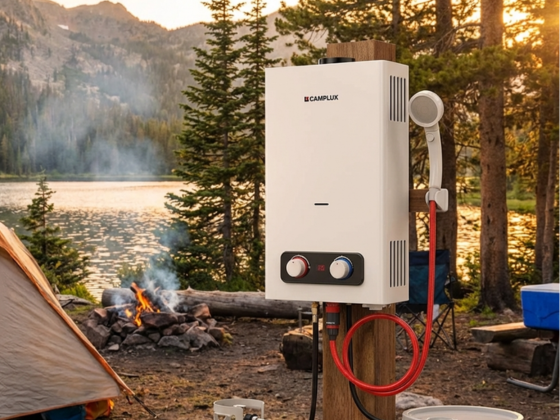
Weight is another genuine advantage. The Camplux BW158B weighs just 13 lbs. Carry it one-handed, hang it from a tree branch or a post, and you're showering in under five minutes. That's a realistic camp setup, not a marketing scenario.
Battery-powered ignition means no external electricity needed for startup. Most models use two D-cell batteries for ignition. Combined with a 1 lb propane canister or a standard 20 lb tank, the whole system is genuinely self-contained. For boondocking or remote Canadian wilderness sites with no electrical hookup, this setup is hard to beat.
Side-by-Side Comparison: Camplux Camping Water Heaters
Here's a direct look at the Camplux models most relevant to Canadian camping. The differences between them are real and worth understanding before you spend.
| Model | Flow Rate | BTU Output | Min. Pressure | CSA Approved | Price (CAD) | Best For |
|---|---|---|---|---|---|---|
| AY132 | 1.32 GPM | ~34,121 BTU | Verify with spec sheet | Yes | $239.99 | Budget campers, light use |
| AY132P43 | 1.32 GPM | ~34,121 BTU | 3.0 PSI | Yes | $299.99 | Off-grid, pump-fed water sources |
| BW158B | 1.58 GPM | 41,000 BTU | Verify with spec sheet | No (outdoor use) | $269.99 | Solo or duo camping, lightweight priority |
| BW264G | 2.64 GPM | Verify with spec sheet | Verify with spec sheet | No (outdoor use) | $369.99 | Group camping, higher-flow needs |
| Nano 3 Max | Verify with spec sheet | Verify with spec sheet | Verify with spec sheet | Verify with spec sheet | $589.99 | Advanced users, temp display, 50–122°F range |
| BW422G | 4.22 GPM | Verify with spec sheet | Verify with spec sheet | No (outdoor use) | $539.99 | Semi-permanent camp setups, high-flow |
If you're shopping for a mid-range option that balances flow and portability, the BW158BP60 kit includes a 1.6 GPM pump and strainer, making it a self-contained solution where View product details to check what's included in the full kit bundle.
Who Is This For?
A common decision concern is buying a heater that's either overkill or underpowered for your actual camping style. Fair question, and the answer depends entirely on how you camp.
Solo backpackers and minimalist campers who are packing into provincial parks or Crown land will prioritize weight and packability above all. The BW158B at 13 lbs is the practical pick here. You're not running multiple fixtures simultaneously, and you don't need 4+ GPM. A quick outdoor rinse is the goal.
RV travelers and van campers with a fixed water system need something that integrates with a 12V pump. The AY132P43 and AY132BP43 were built for this setup. Their 3.0 PSI startup threshold works with the Camplux 12V diaphragm pump without needing additional gear. That pairing is well-documented in the product specs.
Group campers or overlanders running a basecamp for four or more people should look at the BW422G at 4.22 GPM, or the BW264G for a middle-ground option. Higher flow means faster dishes, faster showers, and less waiting around. The trade-off is size and weight, which matters if you're packing out rather than driving in.
How to Choose the Right Option
Start with your water source. That determines pressure, which determines which heater will actually work. If you're hooking up to a campground tap, most heaters will perform fine. If you're drawing from a river or lake with a small pump, check the minimum activation pressure first. Models requiring 4+ PSI may not fire reliably below that threshold.
Next, think about your temperature rise requirement. Canadian summer camping in BC might mean 18°C inlet water, which is manageable for most units. Fall camping in Quebec or Manitoba? Inlet temps can drop to 5–8°C. A higher BTU output (like the 41,000 BTU in the BW158B) handles those conditions better than lower-output budget units.
After testing several options across varying inlet temperatures, the pattern is clear: the gap between a 34,000 BTU and a 41,000 BTU unit matters most when your inlet water is coldest. At 18°C, you might not notice the difference. At 6°C, you will.
Budget is the final filter, and the range here is genuinely wide. C$239 gets you a CSA-approved 1.32 GPM unit that handles light use without fuss. C$589 gets you the Nano 3 Max — real-time temperature display, overheat protection up to 122°F, the works. If you're out in the wilderness every other weekend, that $350 gap is easy to justify. A few summer trips a year? The AY132 does the job.
For a broader look at timing your purchase, the Best Times to Buy Tankless Water Heaters Canada 2026 article covers seasonal pricing trends worth knowing before you commit.
Does CSA Certification Matter for Canadian Campers?
CSA certification for propane gas appliances in Canada falls under standards including CSA B149.1, which governs the installation and use of propane equipment. For a camping water heater, CSA approval means the unit has been independently tested for safe gas operation, flame failure response, and overheat shutoff under Canadian conditions.
This is actually a common point of confusion: some buyers assume CSA certification is just paperwork. It isn't. Propane appliances without it may not be legal to use in certain provincial parks or regulated campsites. Some campgrounds in Ontario and BC have explicit rules about propane appliances meeting Canadian safety standards. Buying a CSA-approved model removes that friction entirely.
The Camplux AY132, AY132G, AY132P43, and AY132BP43 all carry CSA approval for Canadian and US markets. The BW158B and BW422G are designed for outdoor use and may carry different certification profiles. Always verify the current certification status for your specific model on the product page before purchasing, as standards and approvals can be updated.
Worth noting: CSA approval does not automatically mean a unit complies with every provincial code. Ontario's OBC, BC's plumbing code, and Quebec's regulations each have their own installation requirements. For a fixed RV installation, confirm local codes before mounting anything permanently.
Real-World Scenarios: Which Heater Fits Which Camper
Buyers often evaluate heaters on specs alone, then find out in the field that setup complexity was the real issue. Here are four realistic scenarios.
Scenario 1 — The weekend car camper: You drive to a provincial park, park at a serviced site, and want a warm shower after a day hike. Campground water pressure is standard. The AY132 or BW158G handles this without any fuss. Setup takes under five minutes, and the cost is low enough that it's easy to justify.
Scenario 2 — The lake-access canoe tripper: You're paddling in, drawing water from a lake, running a 12V pump off a battery. You need the 3.0 PSI startup of the AY132P43. Without that low-pressure threshold, your heater simply won't fire. This is where the $60 price difference between the AY132 and AY132P43 becomes very concrete. For the AY132P43, View product details to confirm the pump compatibility specs before your trip.
Scenario 3 — The overlander basecamp: You've driven a truck camper into the backcountry with four people. Multiple showers, dish washing, and gear rinsing all happen from the same heater. The BW422G at 4.22 GPM is the right call. The BW264G could work, but at peak demand it may feel underpowered.
Scenario 4 — The precision-minded tech camper: You want to set exact temperatures, get real-time display feedback, and have overheat protection built in. The Nano 3 Max at $589.99 is the pick. It's the most feature-rich option in the lineup and fits buyers who want their camping gear to work like home appliances, not just "good enough."
For a comparison against other brands in this segment, the Camplux vs Onsen Portable Water Heaters: 2026 Canada breakdown covers where each brand wins and loses across similar use cases.
Performance and Value Scoring Matrix
Here's how the main Camplux camping models stack up across the criteria Canadian wilderness campers actually care about. Scores are relative (1 = weakest in the lineup, 5 = strongest) and based on published specs.
| Criterion | AY132 / AY132G | AY132P43 | BW158B | BW264G | Nano 3 Max | BW422G |
|---|---|---|---|---|---|---|
| Portability / Weight | 4 | 4 | 5 | 3 | 3 | 2 |
| Low-Pressure Performance | 3 | 5 | 3 | 3 | 3 | 3 |
| BTU / Cold-Water Performance | 3 | 3 | 4 | 4 | 4 | 5 |
| CSA Certification | 5 | 5 | Verify | Verify | Verify | Verify |
| Value for Money | 5 | 4 | 4 | 3 | 3 | 3 |
| Temperature Control Precision | 3 | 3 | 3 | 4 | 5 | 3 |
If you prioritize value for money and CSA compliance, the AY132 series fits best. If low-pressure startup is your main concern, the AY132P43 wins that criterion outright. If flow rate is what matters, the BW422G leads the lineup.
(Quick tip: check the hidden costs of portable water heaters before finalizing your budget. Pump, hose, propane regulator, and strainer costs add up, and not every model includes them.)
Which One Should You Choose?
For the budget-conscious camper who wants a CSA-approved, proven propane heater for weekend trips to serviced provincial parks, the AY132 at $239.99 is the most sensible starting point. It covers the basics, it's been independently safety-certified for Canadian markets, and it's light enough to pack without second-guessing.
For the off-grid and lake-access camper who relies on a 12V pump, the AY132P43 is the specific answer. That 3.0 PSI startup spec is not a minor detail — it's the difference between a heater that fires and one that leaves you cold. The Camplux vs Onsen comparison also covers this use case if you want to see how it stacks up against other brands in the off-grid category.
For the serious wilderness camper or overlander who wants high flow, precise temperature control, and premium build quality, the Nano 3 Max at $589.99 or the BW422G at $539.99 are the right tier. Neither is overkill if you're running a four-person basecamp or spending extended time in the backcountry. The Nano 3 Max wins on control features; the BW422G wins on raw flow rate. Pick based on which of those two things matters more to your setup.
For warranty, returns, and customer support questions on any of these models, Camplux's support team can be reached through camplux.ca. Warranty terms vary by model, so confirm the specific coverage on the product page before purchasing rather than relying on general claims.
For more context on the broader electric heater side of the lineup, the Electric Mini Tank Water Heaters: Canada 2026 Buyer's Guide covers situations where you have power access and want a tank-based solution instead.
Frequently Asked Questions
Can I use a Camplux camping water heater in freezing temperatures?
Most Camplux portable propane heaters include anti-freezing protection that activates when water temperature inside the unit drops near freezing. However, these are outdoor units designed for three-season use, not sub-zero winter camping. If ambient temperatures are at or below 0°C, the propane in your tank also loses pressure, which can reduce flame output or prevent ignition. For cold-shoulder season camping (late September through October in most Canadian provinces), insulating your propane tank and draining the heater after each use are practical habits worth building.
What size propane tank do I need for a camping water heater?
For a weekend trip with 2–3 people, a standard 1 lb disposable canister works for short showers and dish washing. A 20 lb tank is the better choice for multi-day trips or group camping. The burn rate depends heavily on BTU output and how long you run the heater per day. A 41,000 BTU unit running for 30 minutes per day will consume propane at a predictable rate, but the exact consumption varies by temperature rise required. Most Camplux models accept both canister connectors and standard regulator hoses for larger tanks, but verify this on the specific product page before purchasing.
Do I need a water pump, or does the heater work from a tap?
If you're connected to a campground water supply or a pressurized RV tank, no pump is needed. If you're drawing from a lake, river, or standalone container, you'll need a 12V diaphragm pump to create enough pressure to activate the heater. The minimum startup pressure is the key spec to match. The AY132P43 starts at 3.0 PSI, which works with the Camplux 12V pump. Higher-threshold models may require a more powerful pump to fire consistently.
How do I maintain a portable propane water heater between camping trips?
Drain all water from the unit after every trip. Water sitting in the heat exchanger over weeks or months accelerates mineral buildup and can cause corrosion, especially in areas with hard water (common across much of Ontario and the Prairies). Clean the water inlet filter periodically, inspect the gas hose connections for cracks or wear, and store the unit indoors in a dry space. Avoid leaving a propane canister attached during storage. These steps are straightforward, and following them extends service life meaningfully.
Is a camping water heater worth it compared to solar shower bags?
Solar shower bags cost under $30 and work well in direct sunlight in summer. A propane camping heater costs $239–$590 but delivers consistent hot water regardless of cloud cover, season, or time of day. For occasional fair-weather camping, a solar bag is a reasonable low-cost choice. For regular use, shoulder-season trips, or any situation where you need reliable hot water on demand, the propane heater pays for itself quickly in comfort and consistency. The gap is especially stark in Canadian fall, where overcast skies and cold mornings make solar bags unreliable for weeks at a time.