


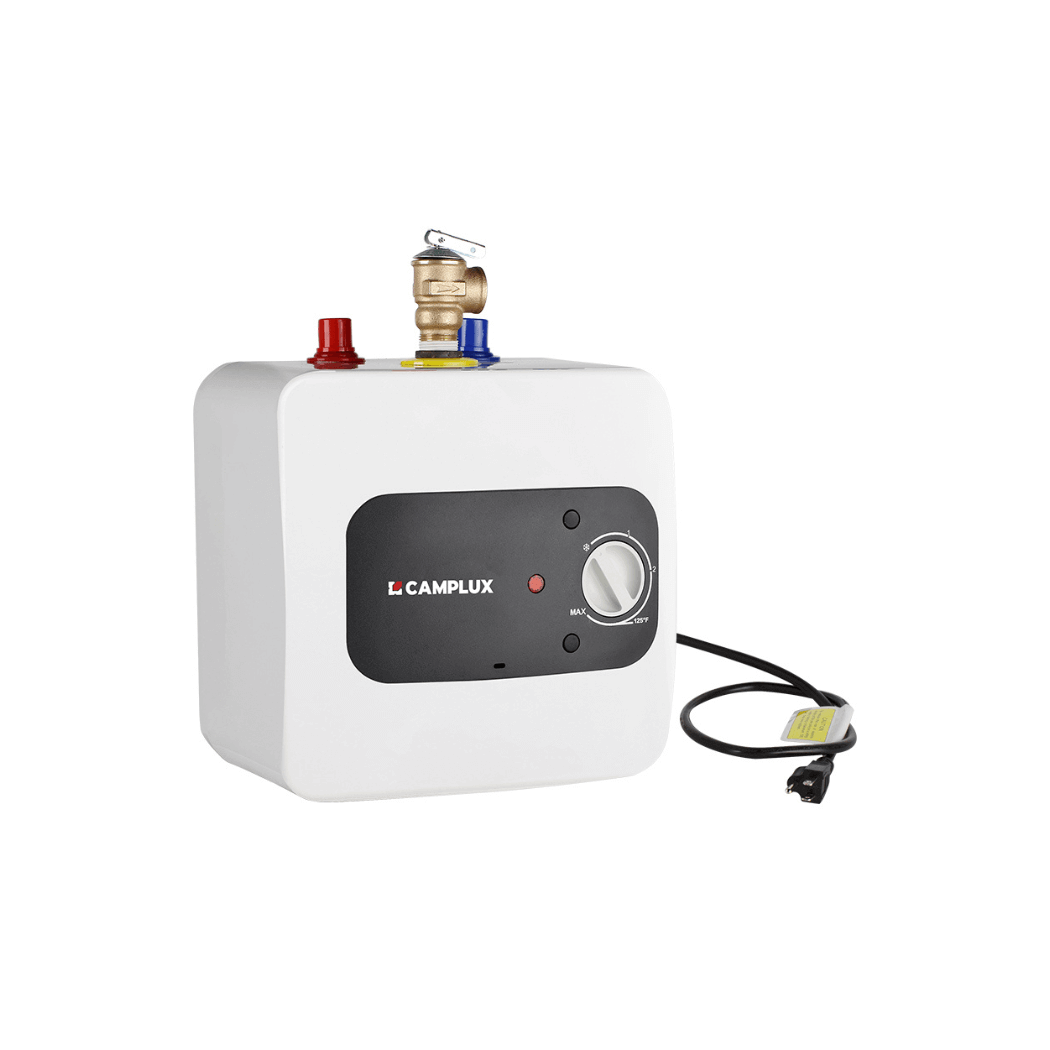
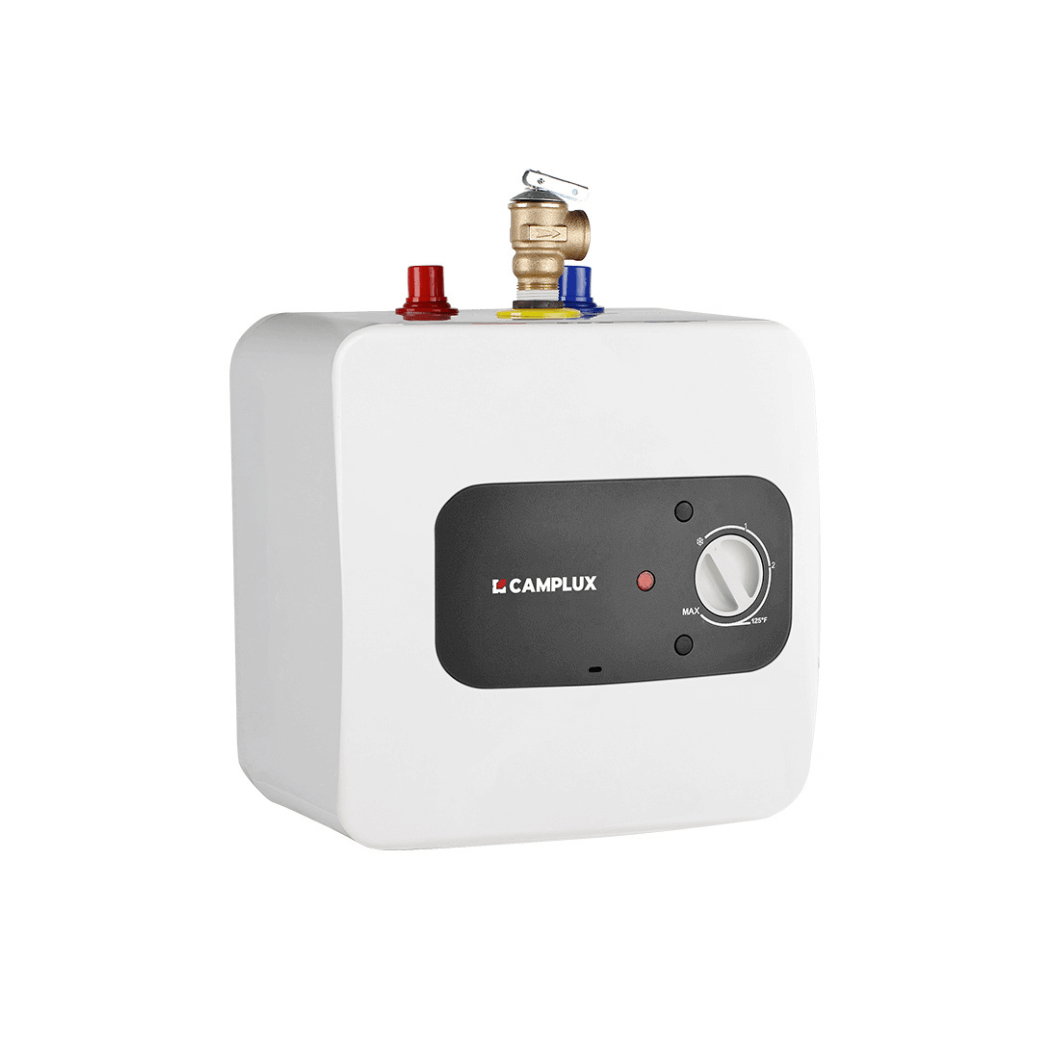

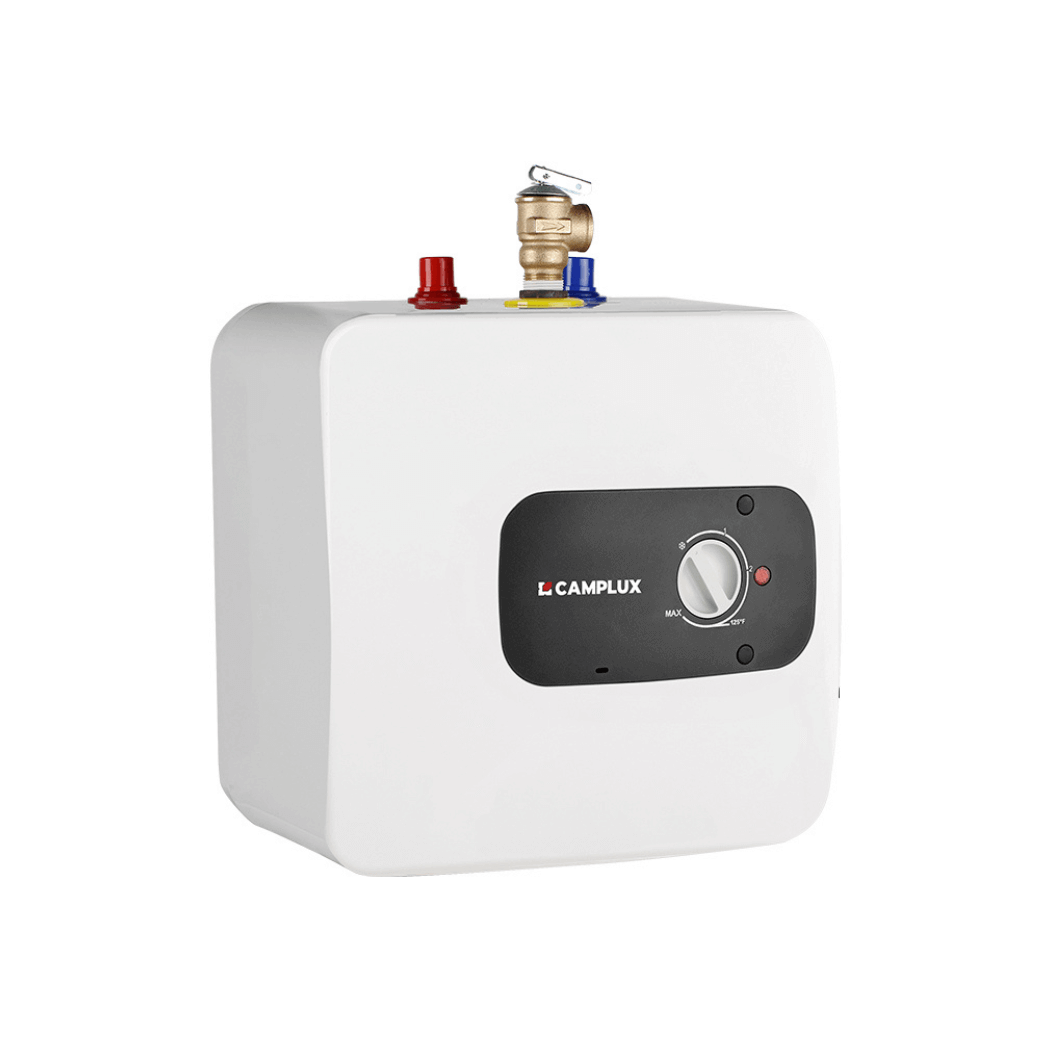
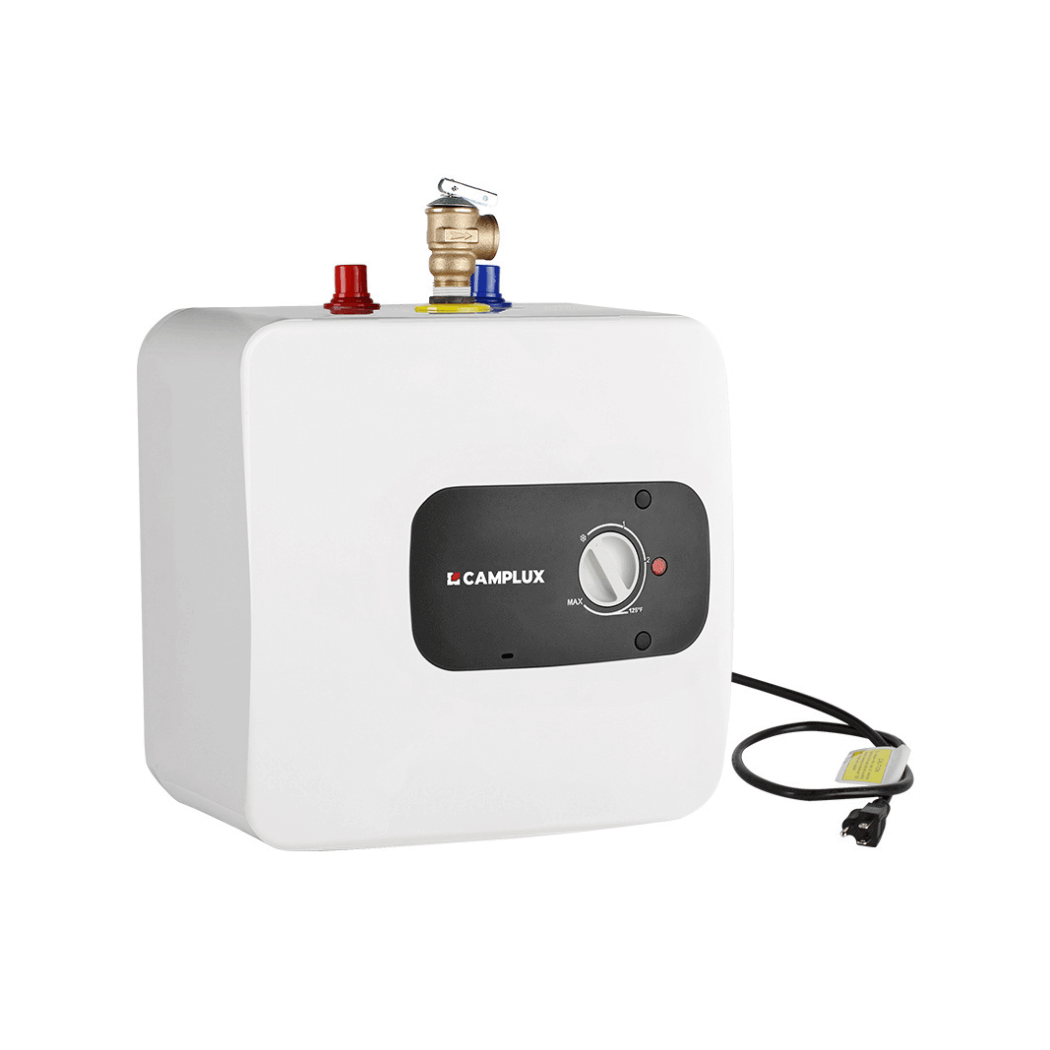
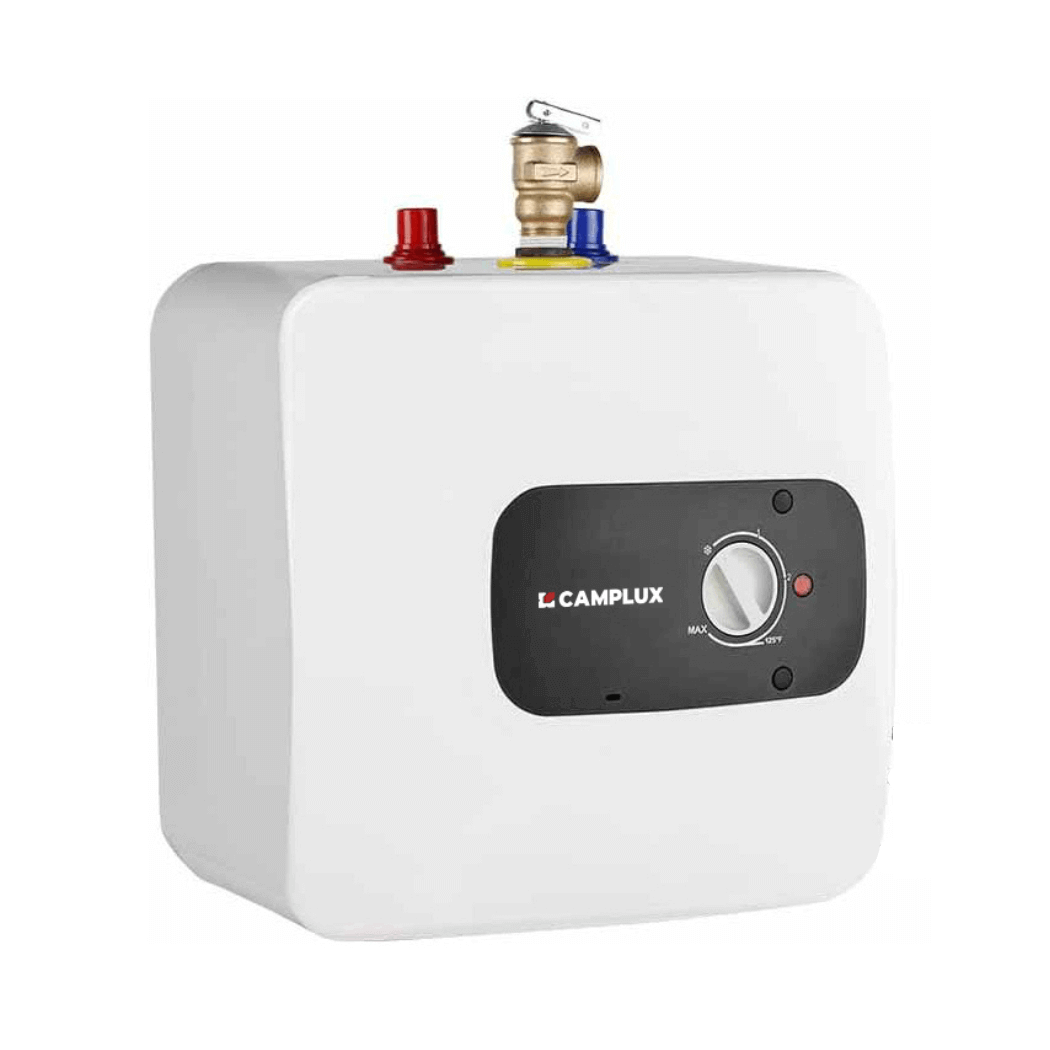
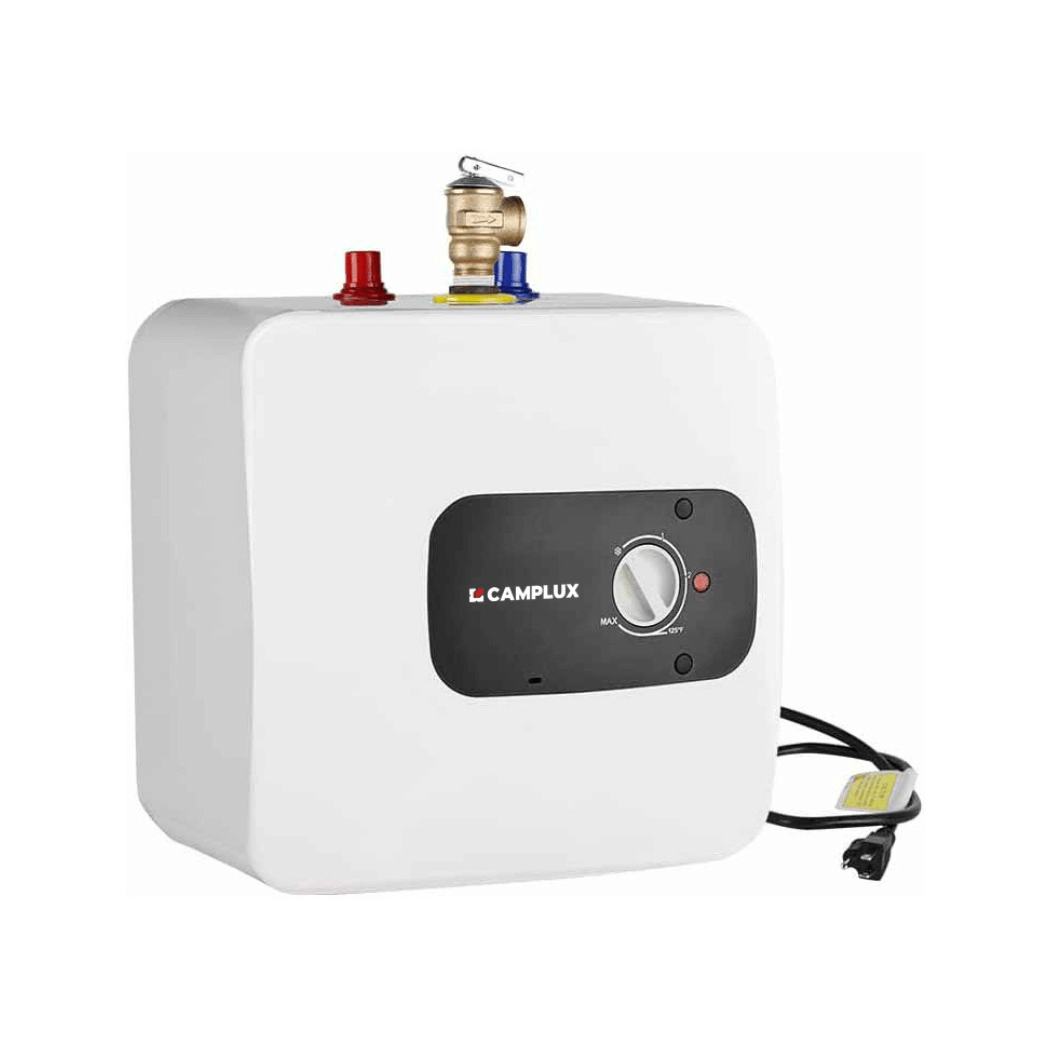





Electric Mini Tank Water Heaters
Electric Mini Tank Water Heaters — Instant Hot Water at the Point of Use
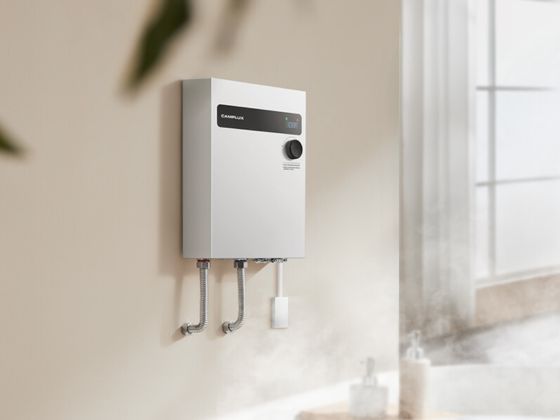
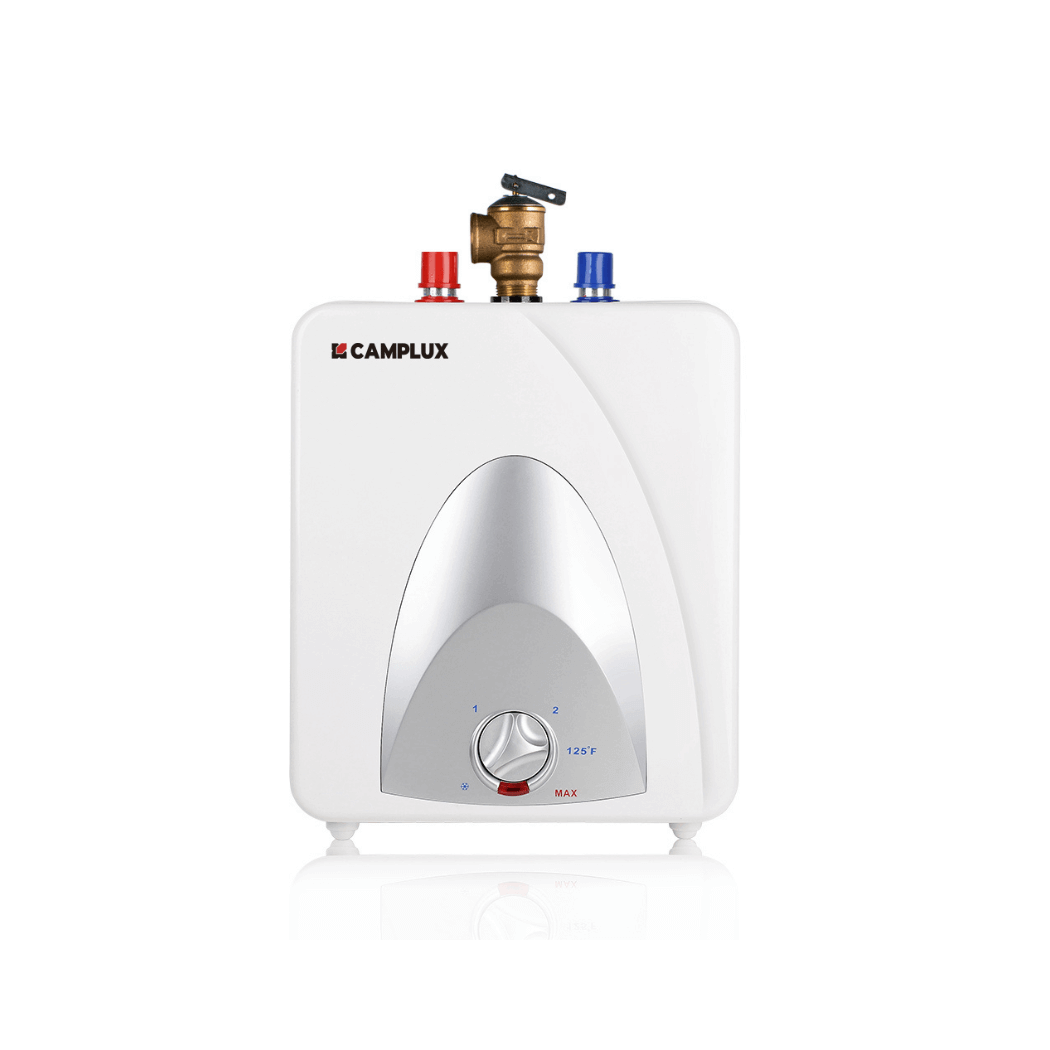
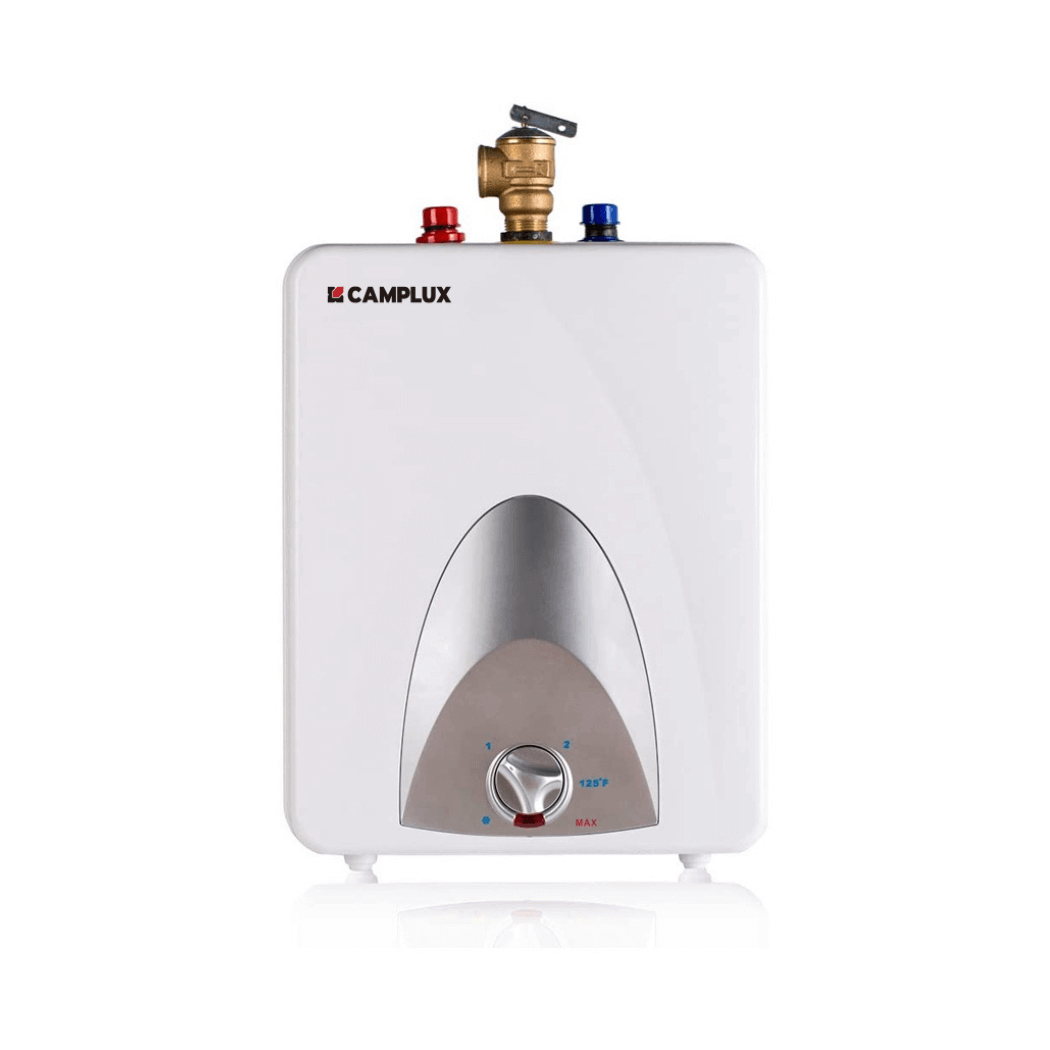
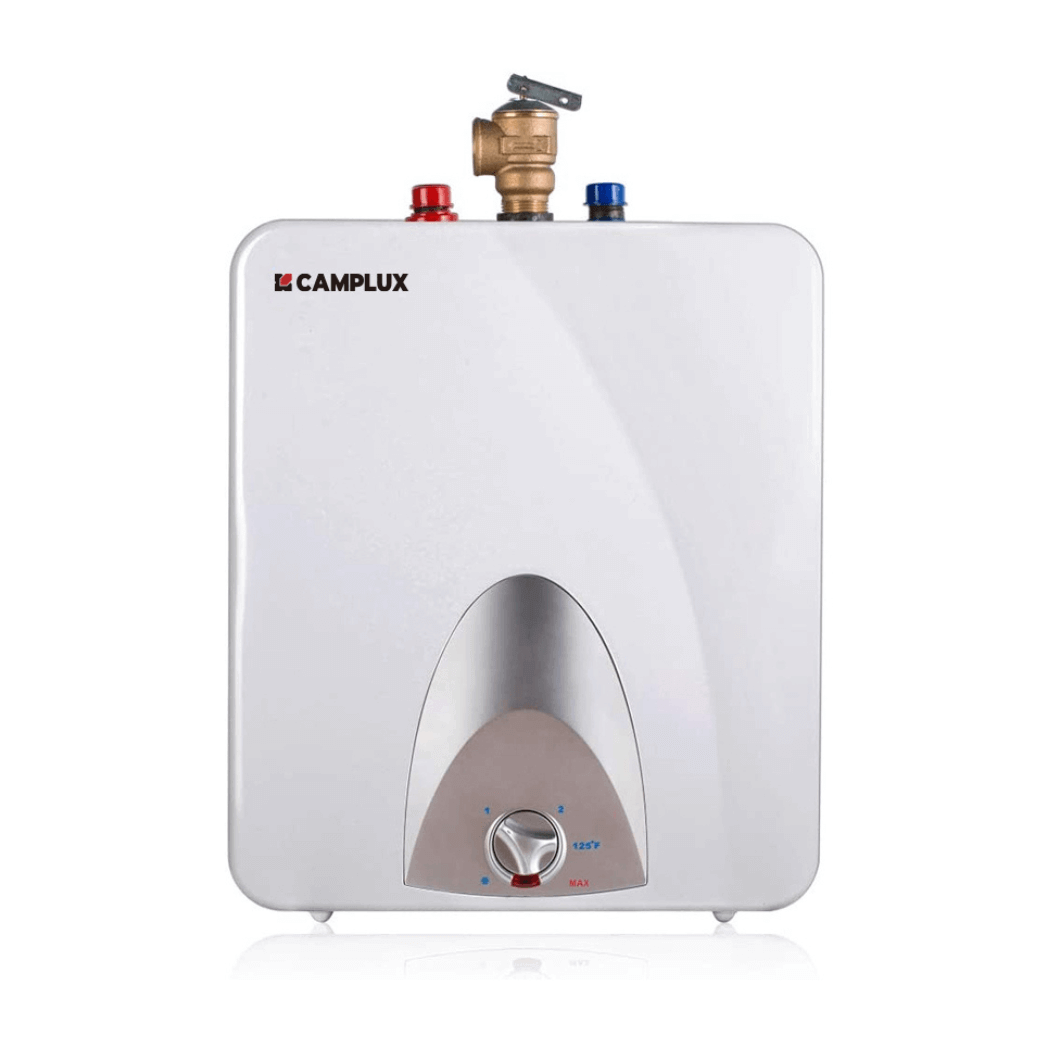
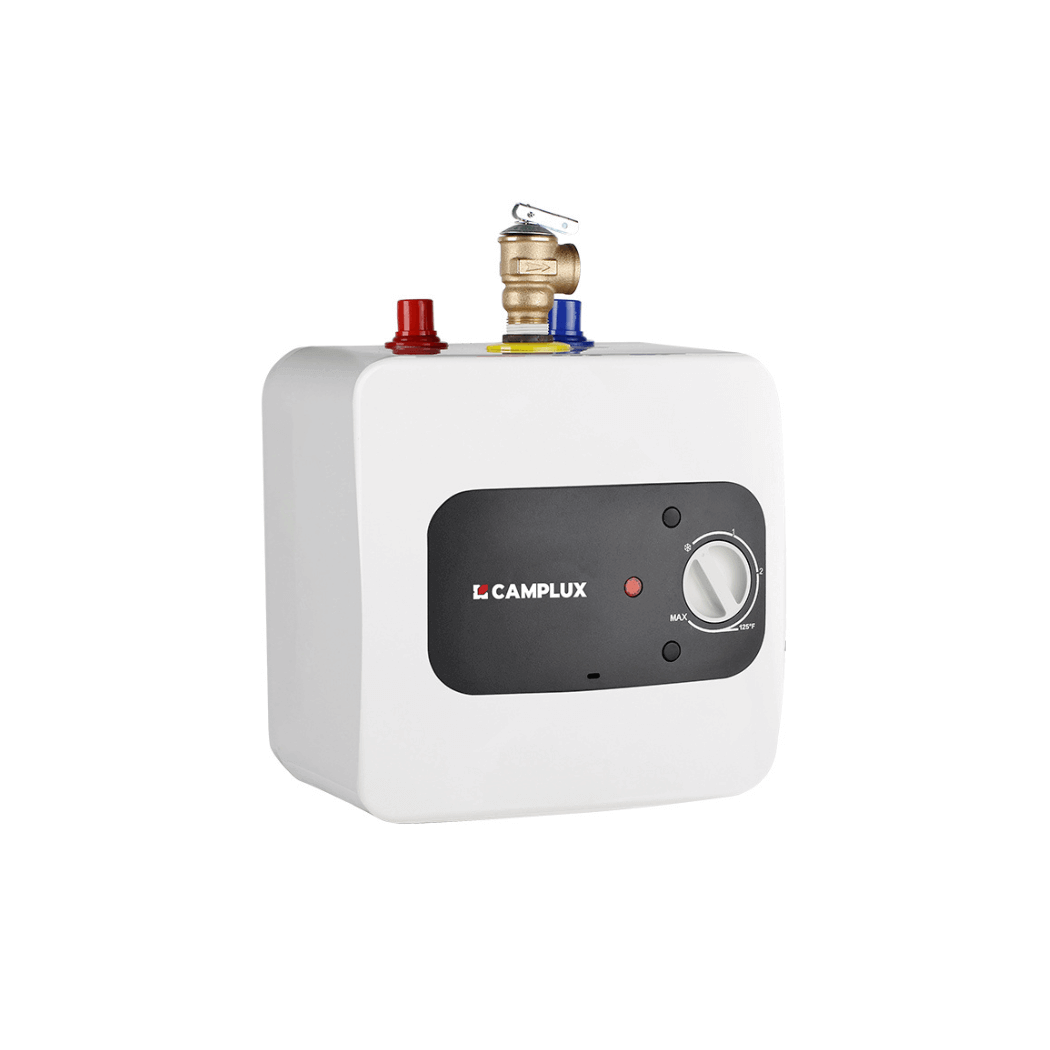
Electric mini tank water heaters solve a specific problem: the long wait for hot water at a tap that's far from the main water heater. Instead of running hot water through 10 or 15 metres of pipe until it finally arrives warm, a mini tank unit installs directly under the sink or in a nearby closet, stores a small volume of pre-heated water, and delivers it instantly when you open the tap.
All Camplux mini tank units in this collection run on standard 120V power — no dedicated circuit, no panel upgrade, no electrician required for the power connection. Plug into an existing outlet under the sink and connect to the cold water supply. Installation is straightforward enough for a confident DIYer, though a licensed plumber is recommended for supply line connections in most Canadian provinces.
These are storage units, not tankless — they maintain a reservoir of hot water at temperature. Recovery time matters if you're drawing continuously: once the stored volume is depleted, the unit needs time to reheat. For continuous high-demand applications, see Electric Tankless Water Heaters or Gas Tankless Water Heaters.
Choosing the Right Size for Your Application
The right gallon capacity depends on how much hot water you need between refills and how much space you have for installation. Smaller units fit in tight under-sink cabinets; larger units may need a floor or shelf mount.
- 1.3 Gallon — Under-sink style ($229.99) and point-of-use style ($229.99). Enough for hand-washing at a single sink. The smallest footprint in the lineup — fits in tight under-sink spaces.
- 2.5 Gallon — Portable 2.5 gallon ($219.99) and standard 2.5 gallon ($249.99). Suits a bathroom sink with moderate use — hand-washing and face-washing without running cold.
- 4.0 Gallon — Standard 4 gallon ($232.99) and point-of-use 4 gallon ($289.99). A good balance of capacity and footprint for a bathroom or kitchen sink with regular use.
- 6.0 Gallon — 6 gallon ($329.99). Handles a kitchen sink with dishwashing use, or a bathroom with light shower rinsing.
- 6.5 Gallon — 6.5 gallon ($271.59). Similar capacity to the 6 gallon with a slightly different form factor.
- 8 Gallon — 8 gallon ($309.99). Suited to a secondary bathroom or a workshop with regular hand-washing and rinsing needs.
- 10 Gallon — 10 gallon ($429.99). Bridges the gap between point-of-use and a full water heater. Useful for a garage, workshop, or secondary bathroom with moderate demand.
- 18 Gallon — 18 gallon ($489.99). The largest unit in the lineup. Suitable as a primary water heater for a small suite or cabin with limited hot water demand.
Where Mini Tank Water Heaters Make the Most Sense in Canada
Remote bathroom sinks: The most common use case. A bathroom at the end of a long pipe run from the main water heater wastes water and time waiting for hot water to arrive. A 1.3 or 2.5 gallon unit under the sink eliminates the wait entirely.
Workshops and garages: A workshop sink with no hot water connection is a common situation in Canadian homes. A 4 to 8 gallon mini tank unit provides hot water for hand-washing and parts cleaning without running a hot water line from the house.
Basement suites and secondary units: A small mini tank unit provides independent hot water for a basement bathroom or kitchenette without tapping into the main water heater supply.
Cottages and seasonal properties: For a cottage with limited electrical capacity, a 120V mini tank unit provides hot water without the amperage demands of a tankless unit. The 10 or 18 gallon models can serve as a primary water heater for a small cottage with moderate demand.
Offices and commercial spaces: A 1.3 or 2.5 gallon unit under a washroom sink provides instant hot water for hand-washing without the cost of running a full hot water system to a remote location.
Installation Notes for Canadian Buyers
All Camplux mini tank units plug into a standard 120V outlet — the same outlet used by a lamp or a phone charger. No dedicated circuit, no panel upgrade, and no licensed electrician required for the power connection in most provinces.
The water connections — cold water inlet and hot water outlet — connect to standard plumbing fittings. In Canada, plumbing work that involves connecting to supply lines may require a permit and a licensed plumber depending on your province and municipality. Check with your local authority having jurisdiction (AHJ) if you're unsure.
Mini tank units include a pressure relief valve and should be installed with a drain line routed to a floor drain or bucket per the manufacturer's instructions. Do not install in a fully enclosed space without access to the pressure relief valve.
Frequently Asked Questions
How long does a mini tank water heater take to heat up initially?
Initial heat-up time depends on the unit's wattage and tank size. A 1.44kW unit heating a 6-gallon tank from cold takes approximately 60–80 minutes to reach full temperature. After the initial heat-up, the unit maintains temperature continuously, so hot water is available immediately on subsequent draws.
Can I use a mini tank water heater as my only water heater?
For a small suite, cabin, or single-bathroom application with moderate demand, the 10 or 18 gallon models can serve as a primary water heater. For a full household with regular shower use, a tankless unit or a full-size storage tank is more appropriate. See Electric Tankless Water Heaters for higher-capacity options.
Do mini tank water heaters work in cold Canadian winters?
Yes. Unlike tankless units, mini tank heaters maintain a stored volume of hot water at temperature regardless of inlet water temperature. Cold inlet water simply takes longer to heat on recovery. For a point-of-use application in an unheated space (garage, workshop), ensure the unit itself is not exposed to freezing temperatures — drain and disconnect if the space will drop below 0°C.
What's the difference between the "under-sink style" and "point-of-use style" units of the same gallon size?
The form factor differs — under-sink style units are designed to mount vertically in a cabinet, while point-of-use style units may have a different mounting orientation or connection placement. Both deliver the same hot water capacity. Choose based on your installation space and how the connections align with your plumbing.