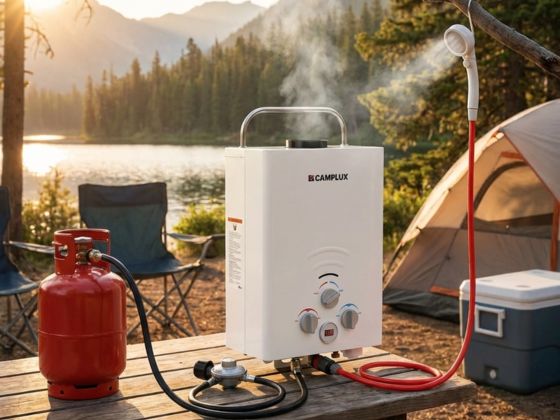
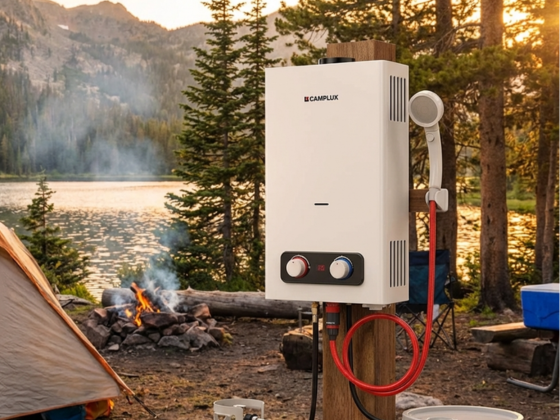
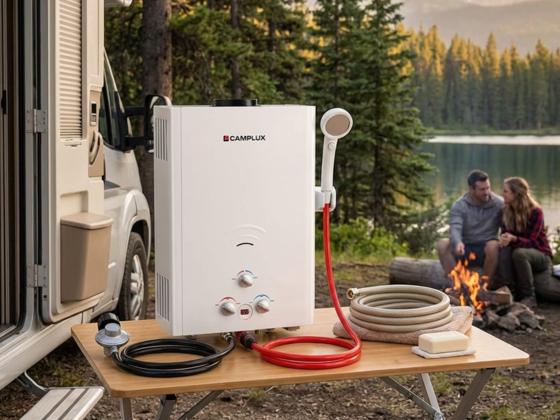
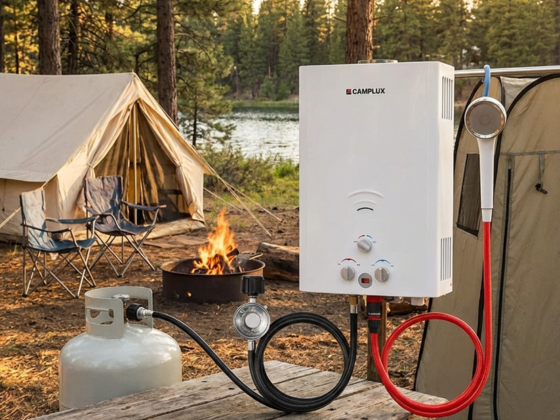

Propane gas regulator and hose safety means using CSA-certified components, inspecting connections before every trip, and following Canada's CSA B149.1 installation code. A faulty regulator or cracked hose can cause gas leaks, fires, or carbon monoxide buildup. Checking for wear, correct pressure ratings, and proper seal connections takes under five minutes and prevents the most common camping propane accidents.
Key Takeaways
- In Canada, propane regulators must meet CSA B149.1 and be certified to ANSI Z21.80/CSA 6.22 or CSA 6.18 before use with any gas appliance.
- Hoses rated for vapour withdrawal systems are designed for working pressures up to 862 kPa (125 psi); liquid withdrawal systems require hoses rated to at least 2,413 kPa (350 psi).
- Propane is heavier than air, so leaks collect in low spots like tent floors, truck beds, and RV storage compartments rather than dispersing upward.
- Regulators should not be bypassed under any circumstances, per CSA B149.1 Section 5.2.1.3.
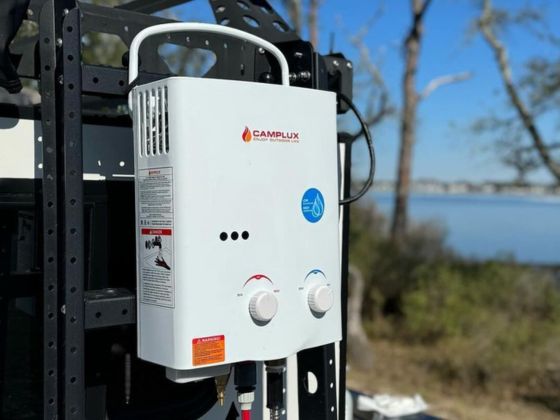
- Camplux portable water heaters ship with a pre-installed 5-foot gas regulator designed for quick-connect setup, reducing improper installation risk at the campsite.
So you've got a propane camping setup and you're wondering: how much of this is actually safety-critical versus manufacturer over-caution? Fair question. The answer depends on how your gear is connected and how old the hose is. A hose rated for a kitchen range is not the same as one designed for a portable camping water heater running at varying outdoor temperatures.
If you're already running a propane-powered shower or cooking setup on your trips, it's worth reading through our Camping Water Heater Certifications Canada: Full Guide alongside this article. Together they cover the two sides of the same coin: what the appliance needs to be, and how the fuel delivery system needs to work.
What Is a Propane Regulator and Why Does It Matter?
A propane gas regulator controls the pressure of gas flowing from your tank to your appliance. Without it, raw tank pressure (which can exceed 200 psi on a warm day) would reach your burner or water heater at an uncontrollable rate, creating a serious fire and explosion risk.
Most camping setups use a two-stage regulation system. The first stage drops the high tank pressure to an intermediate level. The second stage brings it down to the working pressure your appliance actually needs, typically around 11 inches water column (roughly 0.4 psi) for most low-pressure propane appliances. Single-stage regulators exist for simpler setups but are less forgiving of inlet pressure changes as the tank empties.
The hose connecting the regulator to your appliance isn't just a tube — it's a pressure-rated safety component. According to OSHA's regulations, hoses must be designed for a working pressure of at least 250 psi, and their construction must be validated by a recognized testing agency. That standard exists for a reason: a hose that fails under pressure doesn't just leak slowly. It can rupture.
Propane is heavier than air. That's the physical fact most campers never really sit with. A slow leak from a worn hose fitting won't drift harmlessly upward — it'll settle at ground level, pool under a stove, collect in the footwell of your trailer, and just wait. That's why ventilation and leak checks aren't optional habits.
CSA Standards and Canadian Compliance Requirements
In Canada, every propane regulator must be certified and sized to provide required gas flow across the full range of inlet pressures it may encounter, per CSA B149.1 Section 5.2.1.1. Recognized certification standards include ANSI Z21.80/CSA 6.22, UL 144, and CSA 6.18.
Here's where a lot of campers get tripped up: not all propane gear sold in Canada actually carries CSA certification. Products imported and sold online may carry UL or CE marks, which don't automatically satisfy Canadian provincial requirements. British Columbia operates under the BC Natural Gas and Propane Code Regulation, which directly references CSA B149.1. Ontario, Alberta, and other provinces follow similar frameworks with minor local amendments.
The Canadian Propane Association provides province-by-province contacts for regulatory questions. If you're unsure whether a component you've purchased meets local code, your provincial Technical Safety Authority (TSSA in Ontario, Technical Safety BC in BC, or equivalent) can confirm. This matters more than most product listings will tell you.
One rule that applies uniformly across all Canadian provinces: a pressure regulator shall not be bypassed. That's CSA B149.1 Section 5.2.1.3, and there are no exceptions for camping or temporary use.
Hose Safety: What to Inspect Before Every Trip
Hose inspection takes about two minutes and is the single highest-return safety action you can take before a camping trip. Look for cracking, abrasion, kinking, or any visible damage to the outer jacket. Feel along the length for soft spots or bulges.
The Canadian Roofing Contractors Association reference manual specifies that hoses used for propane vapour withdrawal must be ULC, CSA, or CGA approved for propane service. For vapour withdrawal, hose fittings are rated to 862 kPa (125 psi). Liquid withdrawal hoses carry a 2,413 kPa (350 psi) rating. Most portable camping setups run vapour withdrawal, but confirming your hose's rating label is a 10-second check that matters.
Age is the other factor buyers often overlook. Even a hose with no visible damage degrades internally from repeated exposure to propane compounds, UV light, and temperature cycling. Four or five Canadian winters of stored-then-used-then-stored cycling takes a real toll — replace the hose at that point regardless of how it looks on the outside. Most manufacturers suggest a replacement interval of five years for hoses in regular outdoor use, though always verify against your specific product's documentation.
After connecting your regulator and hose before each use, perform a leak check with soapy water or an approved gas leak detector spray. Apply it to every connection point and look for bubbling. No bubbles means no leak. This is not paranoia. It's a two-minute habit that has prevented countless campfire incidents.
Key Benefits of Using Certified Regulator and Hose Assemblies
Using CSA-certified components gives you consistent pressure delivery, appliance longevity, and a clear chain of accountability if something goes wrong. These are the three practical payoffs that justify paying more than the cheapest unbranded option available online.
Consistent pressure delivery means your camping water heater or stove performs predictably across varying tank levels and ambient temperatures. Propane tank pressure drops as the tank empties and as temperature falls. A quality two-stage regulator compensates for this. You get stable output whether the tank is full on a warm afternoon or down to 20% on a cold Alberta morning. Inconsistent pressure is one reason water heaters fail to ignite reliably, and it's almost always a regulator issue rather than the appliance itself.
Appliance longevity is directly tied to fuel system quality. Overpressure from a failing regulator stresses burner components. Underpressure causes incomplete combustion. Either shortens the service life of whatever appliance is downstream.
Warranty protection is the third benefit that buyers don't think about until they need it. Most propane appliance warranties explicitly require CSA-certified fuel system components — use a non-certified hose or regulator and you may have voided your coverage without realizing it. That's a real financial risk, not just a legal technicality, especially for appliances in the $200–$600 CAD range.
Who Is This For?
This guide is relevant for anyone using propane-powered gear at a Canadian campsite, whether that's a portable shower, a camp stove, an RV range, or a standalone water heater.
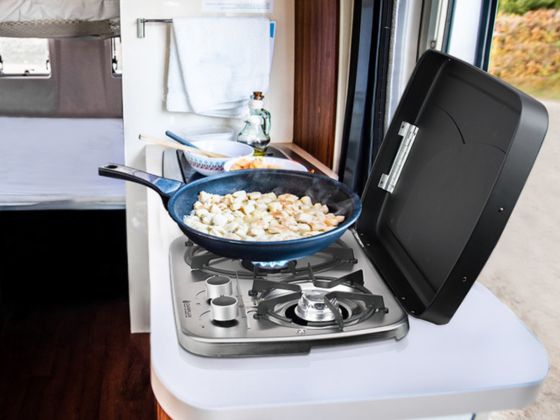
Weekend campers using a single portable stove face lower complexity but still need to verify their regulator is rated for low-pressure appliance use and that the hose is in good condition. The stakes are lower than a full RV setup, but a hose failure in a tent vestibule is still dangerous.
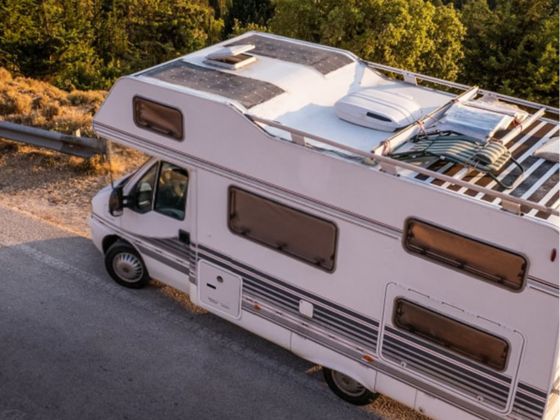
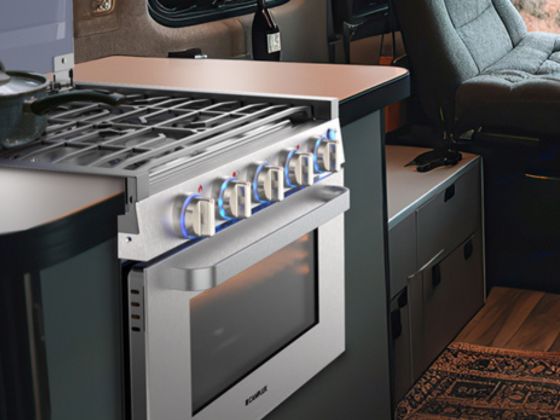
RV and van-life users have more connections, more potential failure points, and more confined spaces where propane can collect. If your setup includes a mounted range, a water heater, and a heating appliance, you should be checking every connection at the start of each trip season, not just visually but with soapy water or a detector. Our guide on Best Portable Propane Water Heaters For Off Grid Canada 2026 walks through how to evaluate full off-grid setups where fuel safety is especially important.
Off-grid property owners running propane systems seasonally should treat their regulator as a consumable part rather than a permanent fixture. Provincial codes in BC explicitly state that maintenance of regulators, hoses, and fittings on construction and temporary heaters is required maintenance work. The same logic applies to seasonal camp setups.
How to Choose the Right Option
The right regulator and hose combination depends on four things: your appliance's BTU demand, the tank size you're running, the operating temperature range you'll encounter, and whether you need vapour or liquid withdrawal.
For most portable camping water heaters and stoves, a low-pressure two-stage regulator (set to approximately 11 inches water column) with a CSA-approved vapour withdrawal hose in the 5-foot range covers the majority of use cases. The 5-foot length is practical: long enough to keep the tank a safe distance from the appliance and avoid heat exposure, short enough to meet code requirements for minimizing hose runs. OSHA's guidance on hose length is explicit: "as short as practicable" while avoiding kinking or routing hoses too close to burner heat.
Quick-tip: if you're buying a portable water heater as part of a package, check whether the regulator is pre-installed and what pressure it's set to. Some units include regulators factory-adjusted for the appliance's specific BTU range. That matters because propane regulators are not universally interchangeable between different types of LP gas systems.
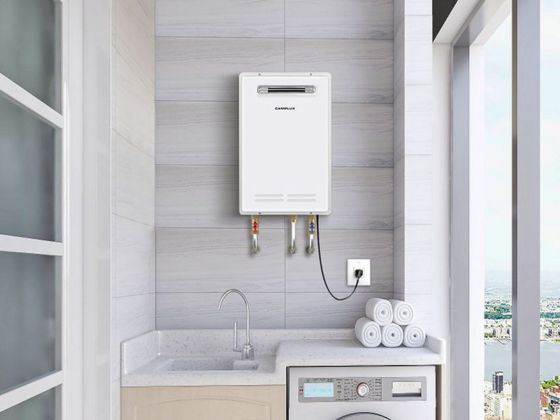
For higher-output applications, like a 33,000 BTU griddle or a high-flow outdoor water heater, verify that the regulator is sized to provide the required flow rate at the minimum inlet pressure you'll realistically encounter. An undersized regulator will throttle your appliance's output and leave you wondering why nothing performs the way it should. When in doubt, consult your propane supplier or a licensed LP gas technician in your province.
What Are the Most Dangerous Propane Regulator Mistakes?
The three most dangerous mistakes campers make with propane regulators are: using the wrong regulator type for the system, skipping leak checks, and storing hoses kinked or coiled tightly under tension.
Using the wrong regulator type is more common than you'd think. There are regulators designed for first-stage use, second-stage use, integral twin-stage use, and line pressure use. They are not interchangeable, even if the fittings physically connect. According to Grinnell Mutual's LP gas guidance, "the type of regulator required will be determined by the type of LP gas system" and users should consult a licensed LP gas plumber when selecting one. Buying whatever is cheapest or most available online without confirming the type is a real risk.
Skipping the pre-use leak check is the mistake with the most immediate consequence. Connections loosen during transport. Fittings can develop micro-cracks from thermal cycling. A hose that was fine at the end of last summer may have quietly developed a slow leak sitting in a garage through a Canadian winter. Soapy water costs nothing. The habit takes 90 seconds.
Storage matters too. Hoses left kinked or under pressure for extended periods develop stress fractures in the inner lining that aren't visible from the outside. Store hoses loosely coiled, away from direct sunlight, and completely depressurized when not in use. This alone can extend hose service life considerably.
How Camplux Portable Water Heaters Handle This
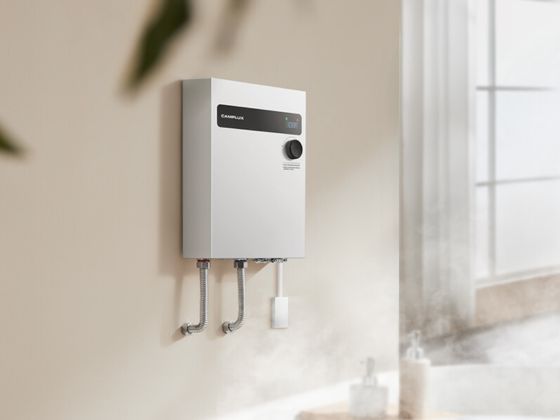
Camplux designs its portable water heaters with propane safety integration built into the setup process rather than left to the user to figure out independently.
The Camplux AY132 comes with a 5-foot gas regulator pre-installed and is CSA-approved for Canadian and US markets. It includes flame failure protection, anti-freezing protection, and overheating protection as standard. The 1.32 GPM flow rate and startup pressure requirement mean it's calibrated specifically for the regulator included, which reduces the risk of users pairing mismatched components. If you're evaluating how it fits into a broader camping setup, How To Choose A Portable Water Heater For Canadian Camping provides a solid framework.
For higher-flow applications, the Camplux BW422G runs at 4.22 GPM and is built for outdoor use with a setup time of around 5 minutes. The product documentation explicitly instructs users to check for gas leakage before operation, which reflects the same habit this guide recommends.
The Camplux BW158BP60 kit goes further by including a pre-installed regulator and quick-connect fittings across all accessories, specifically to reduce improper installation risk. It also includes a 1.6 GPM water pump and strainer. This kind of integrated kit approach is genuinely useful for campers who want one box that works rather than assembling components from multiple sources and hoping the pressure ratings align.
Worth noting: Camplux's warranty terms vary by model and are detailed on each product page. Checking the specific warranty for your model before purchase is worth the two minutes, particularly for higher-investment units. If you're comparing value across the line, our Affordable Vs Premium Camping Water Heaters Canada 2026 breakdown covers the practical trade-offs.
Regulator and Hose Types: Quick Comparison
Different regulator types serve different camping setups. Here's how the main options compare against the criteria that matter for Canadian outdoor use:
| Type | Best For | Pressure Output | Hose Rating Needed | CSA Certification Required | Typical Canadian Price Range |
|---|---|---|---|---|---|
| Single-Stage Low Pressure | Simple portable stoves, small tanks | ~11 in. WC (0.4 psi) | 125 psi (vapour withdrawal) | Yes (CSA 6.22 or 6.18) | C$15–C$40 |
| Two-Stage Low Pressure | Portable water heaters, RV appliances | ~11 in. WC (stable across tank levels) | 125 psi (vapour withdrawal) | Yes (ANSI Z21.80/CSA 6.22) | C$30–C$80 |
| High-Pressure Adjustable | High-BTU burners, outdoor griddles | Adjustable, up to ~30 psi | 250 psi minimum | Yes | C$25–C$65 |
| Integral Twin-Stage (RV) | Full RV multi-appliance systems | ~11 in. WC (auto-changeover) | 125–350 psi depending on withdrawal | Yes (provincial inspection may apply) | C$60–C$150+ |
And here's how common portable camping water heater setups compare on safety-relevant specs:
| Camplux Model | Flow Rate | Included Regulator | CSA Approved | Startup Pressure | Price (CAD) |
|---|---|---|---|---|---|
| AY132 | 1.32 GPM | Yes, 5-ft pre-installed | Yes | Verify spec sheet | $239.99 |
| AY132P43 | 1.32 GPM | Yes, includes pump | Yes (CSA) | 3.0 PSI | $299.99 |
| BW158BP60 | 1.6 GPM (pump) | Yes, quick-connect fittings | Verify product page | Verify spec sheet | $339.99 |
| BW422G | 4.22 GPM | Yes | Verify product page | Verify spec sheet | $539.99 |
| BW264G | 2.64 GPM | Yes | Verify product page | Verify spec sheet | $369.99 |
For startup pressure specifically, the AY132P43 is the only model with a published 3.0 PSI startup threshold in the product listing, making it well-suited for gravity-fed or low-pressure pump setups common in off-grid and wilderness camping. If you're setting up a similar rig, the Top Camping Water Heaters For Canadian Wilderness 2026 guide covers real-world performance context for low-pressure scenarios.
Frequently Asked Questions
How often should I replace a propane hose for camping use?
Most manufacturers recommend replacing propane hoses every five years for gear in regular outdoor use, but this assumes proper storage and no visible damage. If you're using equipment seasonally in Canada, that means several freeze-thaw cycles per year, which accelerates internal degradation. Check for stiffness, cracking, or any whitening of the outer jacket at each season start. A hose that fails any visual check should be replaced regardless of age.
Can I use a BBQ regulator on a portable camping water heater?
Not safely. BBQ regulators are typically set to a fixed low pressure for specific BTU ranges designed around grills. Portable water heaters may require a different flow rate or pressure setting, and using a mismatched regulator can result in inadequate ignition, erratic flame, or in some cases overpressure. Regulators for different LP gas systems are not interchangeable. Always use the regulator specified for your water heater model or one confirmed compatible by the manufacturer.
What should I do if I smell propane at my campsite?
Stop using all ignition sources immediately, including stoves, lighters, and battery-powered devices that could spark. Move everyone away from the area. Do not try to find the leak while standing in the gas. Shut off the tank valve only if you can do so safely from upwind. Propane settles low, so move uphill or upwind and wait several minutes before returning. If you're in an enclosed space like a camper van or trailer, exit immediately and leave the door open. Only return once you've confirmed the source and fixed it.
Are propane regulators covered under typical camping gear warranties?
It varies significantly by brand and product. Regulators included with Camplux water heater packages are covered under the product's standard warranty, but the exact terms (duration, what's included) differ by model. Standalone regulators purchased separately typically carry a one-year warranty from the manufacturer. The key thing to check is whether your appliance warranty requires CSA-certified fuel system components to remain valid. Using a non-certified third-party regulator on a warranted appliance can void coverage entirely.
Does cold weather affect propane regulator performance in Canada?
Yes, noticeably. Propane tank pressure drops as temperature falls, and at temperatures below about -15°C, a standard propane setup may struggle to deliver adequate flow for full BTU output. Two-stage regulators handle pressure variation better than single-stage units, making them a better choice for shoulder-season or winter camping in Canadian conditions. If you're camping in northern BC, the Prairies in October, or the Rockies into fall, a two-stage regulator is worth the modest price premium over a basic single-stage unit.
Do I need a permit to use propane at a campsite in Canada?
For typical portable camping use (small tanks, portable appliances), no permit is generally required at most Canadian provincial and national campgrounds. However, regulations vary. Some campgrounds restrict propane appliances near fire bans, require appliances to sit on non-combustible surfaces, or prohibit certain high-BTU setups. Fixed installations in RVs or trailers may require provincial inspection if modifications were made to the propane system. Always check with the specific campground and your provincial Technical Safety Authority for clarity on any permanent or semi-permanent propane installations.
If you're building out a full camp kitchen or off-grid hot water system, the Camping Water Heaters For Canadian Rockies 2026 Review covers real-world performance context for demanding Canadian environments where getting the fuel system right from the start pays off every trip.
Sources
- Gastite – Certified LP/Propane Line Pressure Regulator Guidebook (CSA B149.1 reference)
- Canadian Propane Association – Industry Regulators (Province-by-Province Contacts)
- BC Laws – Gas Safety Act: BC Natural Gas and Propane Code Regulation
- Canadian Roofing Contractors Association – Hoses and Fittings (Propane Safety)