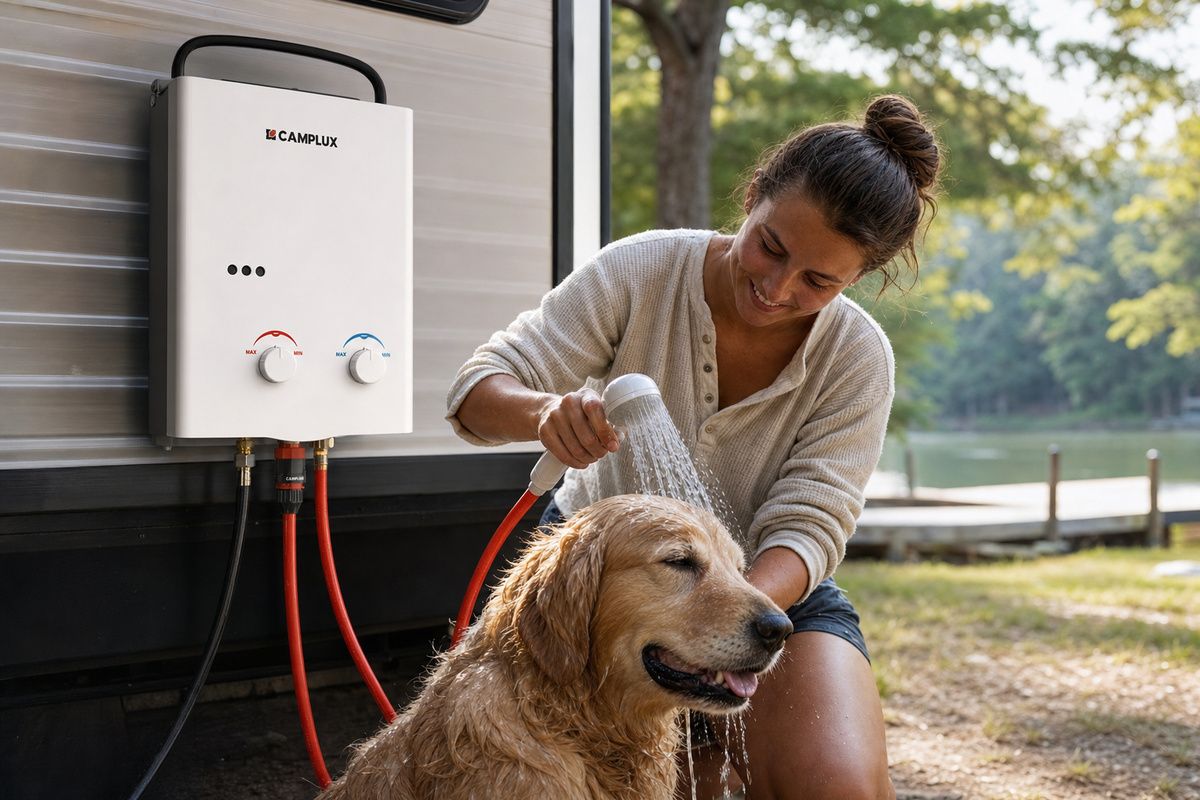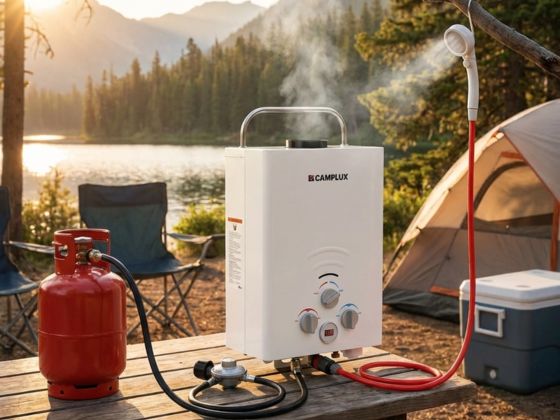
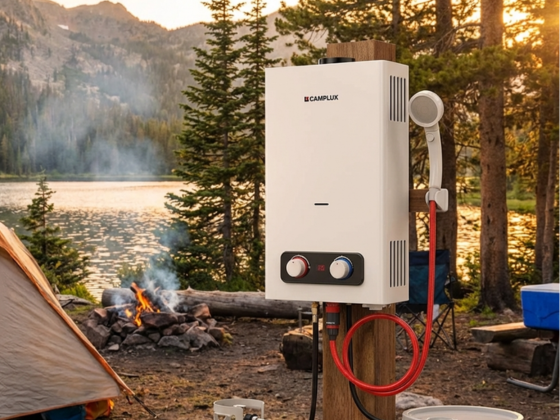
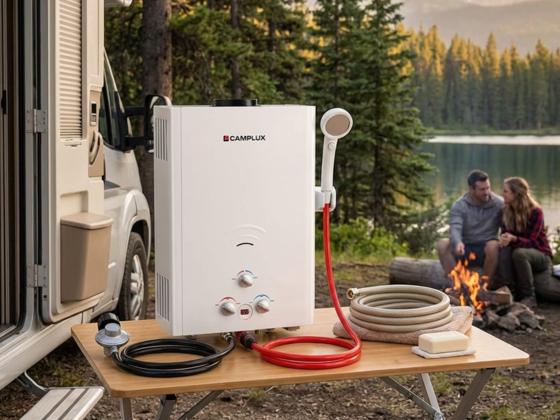
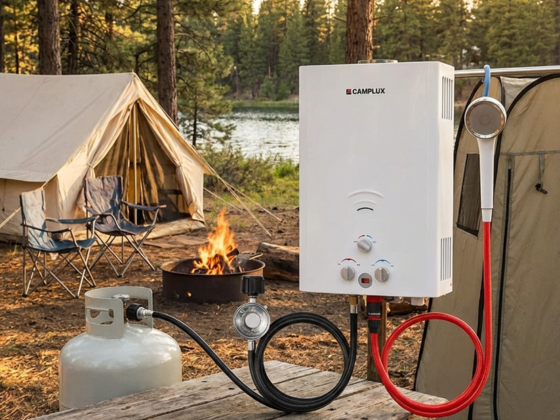
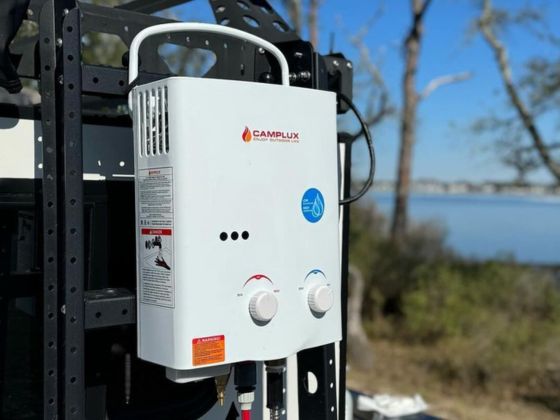
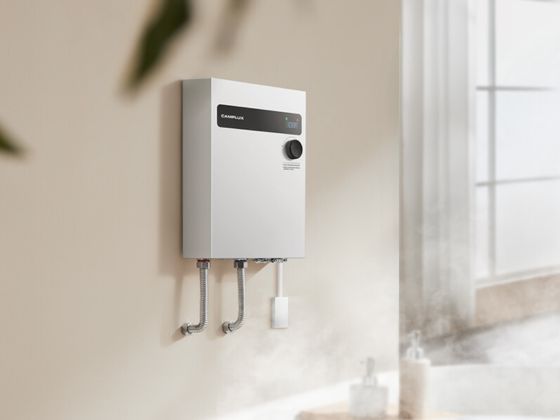

Choosing the right portable water heater for Canadian camping means matching flow rate (measured in GPM), fuel type, and CSA certification to your trip length and group size. For solo or couple weekenders, a 1.32 GPM propane unit handles showers comfortably. Larger groups or multi-night overlanders need 2.64 GPM or higher. Always confirm CSA approval before buying — Canadian safety codes require it for gas appliances.
Key Takeaways
- CSA-certified portable propane water heaters are required for legal use in Canada under gas appliance standards — look for this marking before purchasing.
- Flow rate is the single most practical spec: 1.32 GPM suits 1-2 people, while 2.64 GPM or higher handles multi-person camping groups.
- Canadian retail prices for portable propane camping water heaters range from roughly $239 CAD for entry-level 5L units to $589 CAD for premium models with digital controls and ECO modes.
- A water pump is needed if you're drawing from a lake, river, or jerry can — some kits include one; others require a separate purchase.
- Cold Canadian inlet temperatures (sometimes below 5°C in mountain regions) reduce effective output GPM, so factor in temperature rise when sizing your unit.
So you're planning a camping trip somewhere in British Columbia, Alberta, or Ontario and you want a hot shower at the end of the day. Makes sense. The question isn't just "which portable water heater?" — it's which one won't let you down when the inlet water is cold off a mountain lake and you've got four people waiting for their turn.
That's actually where most buying guides go wrong. They list specs without explaining what those specs mean in real Canadian conditions. A unit rated for a comfortable shower in Arizona will struggle when your water source is 8°C coming out of a glacial stream. We'll get into that. And if you want a starting point right now, the View product details for the Camplux AY132 is a solid entry point for weekend campers.
For more in-depth regional context, the Camping Water Heaters For Canadian Rockies 2026 Review covers specific performance testing in mountain conditions worth reading before you decide.
What Is a Portable Water Heater and How Does It Work?
A portable water heater is a compact, on-demand unit that heats water instantly as it flows through — no storage tank needed. Most camping models run on propane and ignite automatically when water pressure triggers the flow sensor.
Here's the basic process: you connect a propane canister or 20 lb tank, attach a water source (tap, pump, or hose), and turn on the flow. The burner fires, water passes through a heat exchanger, and you get warm water in seconds. No pre-heating. No waiting. When you turn off the tap, the flame cuts out.
Three specs do most of the work here: GPM (gallons per minute, your water output volume), BTU (British Thermal Units, the heating power behind it), and temperature rise (how many degrees the unit can add to incoming water). Read them together and you'll know whether a unit delivers a real shower — or just a lukewarm disappointment.
For Canadian campers specifically, the inlet water temperature is often much colder than what manufacturers test against. A unit tested at 20°C inlet water will perform differently against 6°C glacial runoff. That gap matters more than almost any other spec.
Flow Rate and Temperature Rise: The Two Specs That Actually Matter
Flow rate (GPM) and temperature rise (°F or °C above inlet) are the two numbers that determine whether you'll get a real shower or a frustrating trickle. Get these wrong and nothing else about the unit matters.
According to the A.O. Smith Tankless Water Heater Buying Guide, you need to know your peak demand in GPM and your required temperature rise before sizing any tankless unit. A typical outdoor camping shower uses about 1.0 to 1.5 GPM. Add a second person or a dish-washing station and you're at 2.0 to 2.5 GPM combined.
Cold Canadian inlet temperatures complicate this. At 6°C inlet water (common in Alberta or BC mountain streams), a heater rated for 1.32 GPM may deliver closer to 1.0 GPM before hitting its thermal ceiling. That's not a flaw — it's physics. The fix is either choosing a higher-capacity unit or throttling the flow slightly to allow more heating time per litre.
The Camplux BW264G at 2.64 GPM handles cold-inlet conditions better than entry-level 1.32 GPM models, specifically because it has more BTU headroom to compensate. If you're camping in the Rockies from May through September, that extra capacity isn't a luxury — it's practical insurance.
Key Benefits of Going Tankless for Camping
Tankless portable water heaters beat traditional camping shower bags on almost every practical dimension: consistent temperature, unlimited hot water duration, and genuine usability in cold weather.
First, the weight advantage. Units like the Camplux AY132B weigh around 14 lbs, which is manageable for car camping and most RV setups. You're not hauling a tank — just the heater itself, a propane connection, and a hose.
Second, propane efficiency. A standard 1 lb propane canister can power a 1.32 GPM camping heater for roughly 45 to 60 minutes of active use, depending on the burner output and ambient temperature. That's multiple showers per canister. Larger 20 lb tanks, which most campsite-style setups use, extend that dramatically.
Third — and this matters for Canadian trips — propane works reliably at temperatures where electric alternatives simply quit. Below 0°C, battery-powered and electric setups struggle. Propane burns consistently down to about -40°C (though you'll want a cold-weather regulator below -15°C). For shoulder-season camping in Ontario or late-fall trips in BC, that's a real advantage.
Who Is This For?
The right portable water heater depends almost entirely on your camping style, group size, and how long you're out there. There's no universal answer — but there are clear profiles.
The weekend solo camper or couple doing 2-3 night trips with vehicle access: a 1.32 GPM unit like the Camplux AY132G hits the value sweet spot at $239 CAD. It's compact, CSA-approved, and handles two consecutive showers without issue.
The family or group camper with 4+ people and multi-night stays: you want 2.64 GPM minimum. The Camplux BW264G at $369.99 CAD includes a digital display for precise temperature control, which matters when kids are involved.
The full-time RV or van-lifer who needs daily hot water as part of a permanent off-grid setup: the Camplux AY132BP43 at $319.99 CAD is built for exactly this. It starts at just 3.0 PSI water pressure, works with a 12V pump, and doesn't require a pressurized water system. CSA-approved for both US and Canadian markets.
The serious overlander who wants maximum output and premium features: the Camplux Nano 3 Max at $589.99 CAD tops the lineup with real-time power and temperature display, a 50-122°F adjustable range, and overheat protection built in.
How to Choose the Right Option
Matching a portable water heater to your specific needs comes down to five practical questions. Answer these before you look at a single spec sheet.
1. What's your water source? If you're at a campsite with a pressurized tap, almost any unit works. If you're drawing from a lake, river, or jerry can, you need a pump — either built into the kit or purchased separately. The Camplux BW158BP60 ($339.99 CAD) comes with a 1.6 GPM pump and strainer pre-included, which removes the guesswork.
2. How many people need hot water daily? Solo or couple: 1.32 GPM is enough. Three or more people: 1.58 GPM minimum, 2.64 GPM preferred. The math is simple — each additional shower adds about 1.0 to 1.5 GPM of demand. Don't undersize this.
3. What's your inlet water temperature likely to be? Canadian mountain streams in June can run below 8°C. Factor in at least a 30°C temperature rise requirement and verify the unit's BTU output can handle that at your target flow rate. Manufacturer spec sheets list this — check them.
4. Do you need CSA certification? For Canadian use: yes, always. More on this in the next section. Quick tip: the product listing will state CSA approval explicitly if it has it — don't assume.
5. What's your budget? Canadian retail for portable propane camping heaters runs $239 to $589 CAD across the Camplux lineup. Spending more buys you higher GPM, digital controls, and broader temperature adjustment range — not just a brand name.
If you're still comparing models and price tiers, the Affordable Vs Premium Camping Water Heaters Canada 2026 guide breaks this down with specific use-case recommendations.
CSA Certification and Canadian Safety Requirements
In Canada, any gas-fired appliance used outdoors or in a campsite setting must meet CSA Group standards for gas appliances. For portable propane water heaters, look for explicit CSA approval on the product listing or unit label — this confirms the unit has been independently tested to Canadian safety requirements.
This trips up a lot of buyers who've been reading US product reviews. A "UL approved" label means it passed American standards — not Canadian ones. Different bodies, different tests. The Camping Water Heater Certifications Canada: Full Guide covers this distinction in detail if you want the full picture.
Several Camplux portable models carry explicit CSA certification for both US and Canadian markets — the AY132 series, AY132B, AY132G, and the AY132BP43/AY132GP43 off-grid kits are noted as CSA-approved in their product descriptions. The 16L BW422G is also listed for outdoor propane use. Always verify the current listing before purchasing, since certification status can change with product revisions.
Provincial codes in Ontario (OBC), British Columbia, and Quebec may have additional requirements for permanently installed units. For portable camping use, the CSA marking on the unit itself is the primary checkpoint. If you're renting out a property or running a glamping operation, verify local requirements with your provincial authority.
Model Comparison: Camplux Portable Water Heaters Side by Side
Here's a direct side-by-side look at the main Camplux portable propane options for Canadian camping, from entry-level to premium. All prices are in CAD.
| Model | GPM | Price (CAD) | CSA Approved | Digital Display | Pump Included | Best For |
|---|---|---|---|---|---|---|
| AY132 / AY132G / AY132B | 1.32 | $239.99 | Yes | No | No | Solo/couple, weekend trips |
| BW158B / BW158G | 1.58 | $269.99 | No (verify) | No | No | Small groups, pressurized source |
| BW158BP60 | 1.6 | $339.99 | Verify | No | Yes (1.6 GPM pump) | Off-grid, lake/river source |
| AY132BP43 / AY132GP43 | 1.32 | $319.99 | Yes | No | Compatible (3.0 PSI start) | RV, van life, off-grid daily use |
| BW264G | 2.64 | $369.99 | Verify | Yes | No | Families, multi-person groups |
| BW422G | 4.22 | $539.99 | Verify | Yes | No | High-demand, large groups |
| Nano 3 Max | Verify specs | $589.99 | Verify | Yes (real-time power + temp) | No | Precision users, extended off-grid |
A second comparison table, focused on the low-pressure off-grid kits versus standard models, helps clarify the RV and van-life decision:
| Criterion | AY132 (Standard) | AY132BP43 (Off-Grid Kit) | BW264G (High Flow) |
|---|---|---|---|
| Min. startup pressure | Verify specs | 3.0 PSI | Verify specs |
| Pump required separately | Yes (if no tap) | Works with 12V pump | Yes (if no tap) |
| Digital temp display | No | No | Yes |
| CSA approved | Yes | Yes | Verify current listing |
| Price (CAD) | $239.99 | $319.99 | $369.99 |
| Best scenario | Campsite with tap access | RV, trailer, no grid water | Family groups, multi-shower |
That $80-$130 gap between the AY132 and the BP43 off-grid kit is really just one question: where's your water coming from? No pressurized source? The BP43's low-pressure startup is worth every dollar. Always at a campsite tap? The standard AY132 does the job cleanly and keeps more money in your pocket. For more options across the full off-grid spectrum, the Best Portable Propane Water Heaters For Off Grid Canada 2026 guide is worth a read, and you can also View product details on the AY132BP43 directly to check current availability and shipping timelines.
Final Verdict by Buyer Profile
After testing several options across price points, the right pick comes down to three clear buyer profiles.
For the weekend camper — solo or couple, car camping with campsite water access — the AY132 series at $239.99 CAD is the strongest fit. It's CSA-approved, lightweight, handles two back-to-back showers without complaint, and doesn't require a pump if you have a tap. The value-to-performance ratio here is hard to argue with.
For the family or group overlander who needs consistent hot water for four or more people, the BW264G at $369.99 CAD matches best. The digital display lets you dial in a safe temperature for kids, and the 2.64 GPM output handles cold Canadian inlet water better than entry-level units. The Top Camping Water Heaters For Canadian Wilderness 2026 also highlights why higher-GPM models outperform in northern and mountain conditions.
For the full-time RV or van-lifer, the AY132BP43 off-grid kit at $319.99 CAD is the natural choice — built for daily use, not just the occasional weekend out. The 3.0 PSI startup threshold means it works with a basic 12V pump, no pressurized water system required. It's built for exactly the use case where other portable units give out after a few months of daily demand.
Frequently Asked Questions
Do portable propane water heaters work in cold Canadian winters?
Propane burns reliably in cold temperatures, but most portable camping water heaters aren't designed for sub-zero ambient conditions. Manufacturers generally rate these units for outdoor use above freezing. For shoulder-season use (early spring or late fall in Canada), a cold-weather propane regulator helps maintain consistent gas pressure. Below 0°C, store the unit indoors when not in use to prevent valve and seal damage.
How long does a 1 lb propane canister last with a camping water heater?
A 1 lb propane canister typically powers a 1.32 GPM camping heater for approximately 45 to 60 minutes of active burner time, depending on BTU output and ambient temperature. In practice, cold weather increases gas consumption as the burner works harder to achieve the same temperature rise. For multi-day trips, a 20 lb refillable tank is a more practical choice than single-use canisters.
Can I use a portable water heater inside my RV or tent?
No. All propane-powered portable water heaters in the Camplux lineup are rated for outdoor use only. Using them in enclosed spaces creates a serious carbon monoxide risk. Canadian safety codes and the Canada Consumer Product Safety Act require gas appliances to be used as specified on the label. For indoor RV hot water, a properly vented tankless propane unit with indoor ratings is a separate product category entirely.
What water pump works with Camplux portable water heaters?
The Camplux 12V Water Pump (35 PSI, 1.2 GPM) is purpose-matched to draw from jerry cans, lakes, or rivers and deliver enough pressure to trigger most Camplux heaters. The AY132BP43 off-grid kit is specifically tested with this pump at 3.0 PSI startup. For higher-flow models like the BW264G, confirm the pump's GPM output matches the heater's minimum activation flow rate before pairing them.
Is a digital display worth the extra cost on a camping water heater?
For families with children or anyone sensitive to temperature variation, yes — genuinely. Dial-controlled models need manual tweaking every time your inlet water temperature shifts, and it shifts constantly when you're pulling from a natural source. A digital display lets you set a target and hold it. The BW264G and Nano 3 Max both offer this. For solo campers doing quick showers, the extra cost is harder to justify over a well-reviewed dial unit.
What's the warranty on Camplux portable water heaters?
Warranty terms vary by model — check the specific product page for current warranty details before purchasing. Generally speaking, portable camping water heaters in this category carry manufacturer warranties covering defects in materials and workmanship. For warranty claims and customer support, Camplux Canada can be reached through the website. Buyers often evaluate after-sale support as carefully as the product itself, so checking the returns policy before ordering is worth a few minutes of your time.
For a broader look at what separates entry-level from premium units across the Canadian market, the Electric Mini Tank Water Heaters: Canada 2026 Buyer's Guide covers the electric side of the equation if propane isn't your preferred fuel. And if you're ready to compare the full portable lineup, View product details on the Nano 3 Max to see the full spec sheet and current pricing.
Sources
- How to Choose a Water Heater — Consumer Reports
- How to Choose a Tankless Water Heater — A.O. Smith
- Best Portable Tankless Water Heaters for Camping and Outdoor Adventures in 2026 — Eccotemp
- The Best Tankless Water Heaters of 2026 — Bob Vila
- Ultimate RV Water Heater Buying Guide for Beginners — HEATSO