
It's one of those questions you only think to ask after you've run out of propane mid-shower, 90 minutes from the nearest Canadian Tire. How long does a propane tank actually last on a portable water heater?
The honest answer: it depends on three things — your tank size, your heater's BTU output, and how you use it. But "it depends" isn't useful when you're packing for a week in Algonquin. So here are the actual numbers.
The Basic Math: BTU and Propane Consumption
Propane contains approximately 21,600 BTU per pound. That's a fixed number — it doesn't change by brand or tank size. What changes is how fast your heater burns through it.
A portable water heater's BTU rating tells you its maximum burn rate. A 40,000 BTU heater running at full output burns through roughly 1.85 lbs of propane per hour. A 50,000 BTU unit burns approximately 2.3 lbs/hour at full output.
In practice, most heaters don't run at 100% output continuously — the modulating gas valve adjusts flame intensity based on your flow rate and temperature setting. Real-world consumption is typically 60–80% of the theoretical maximum. Keep that in mind when you're doing the math for your trip.
1 lb Propane Canister: What You Actually Get
A standard 1 lb (16 oz) propane canister contains approximately 21,600 BTU of energy.
- 40,000 BTU heater at full output: ~32 minutes continuous use
- 40,000 BTU heater at 70% output (realistic): ~45 minutes
- 50,000 BTU heater at full output: ~26 minutes continuous use
- 50,000 BTU heater at 70% output (realistic): ~37 minutes
For a solo camper taking a 5–7 minute shower once a day, a 1 lb canister lasts 5–8 days. For a couple taking two showers daily, you're looking at 2–3 days per canister. That's fine for a weekend trip. For anything longer, 1 lb canisters become expensive and inconvenient fast.
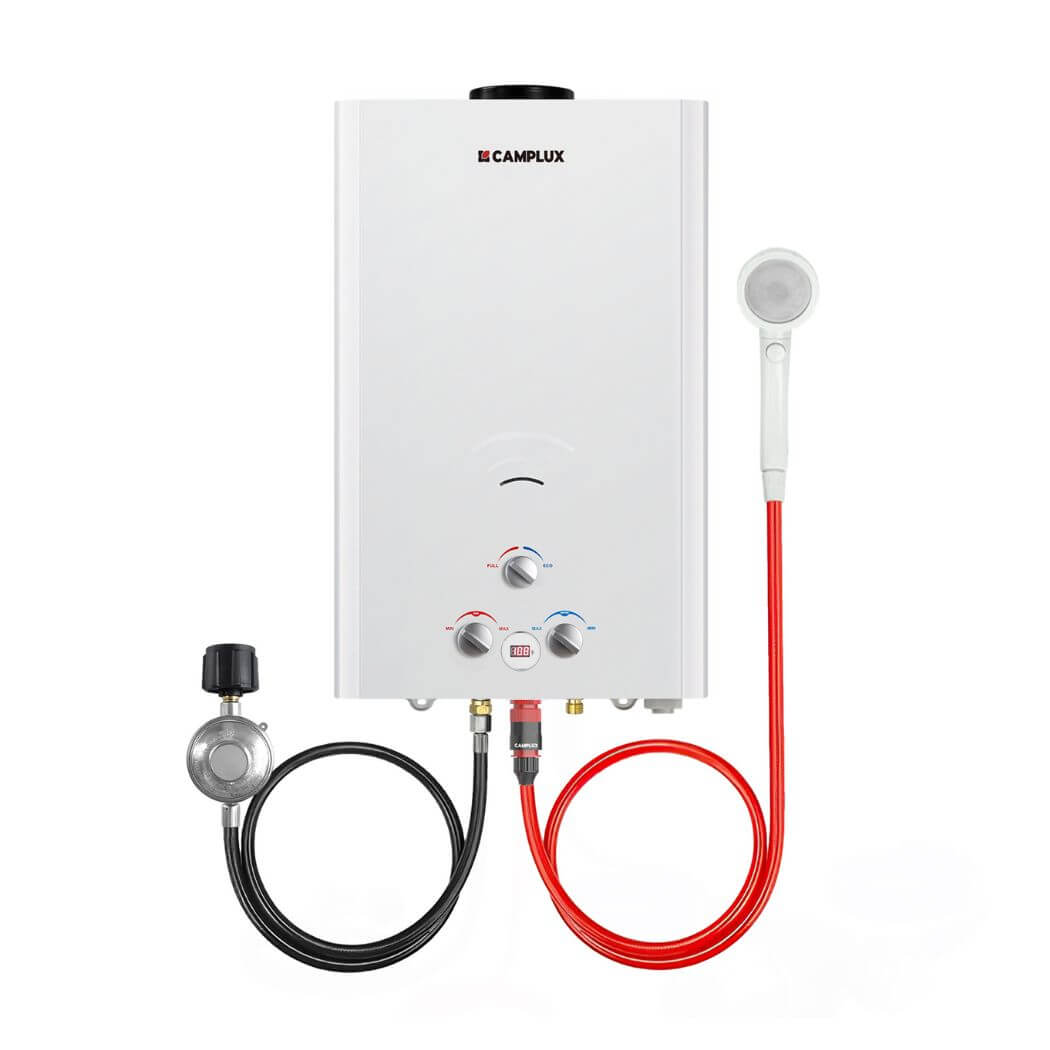
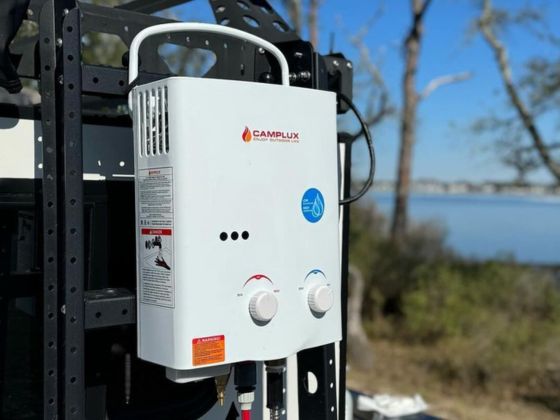
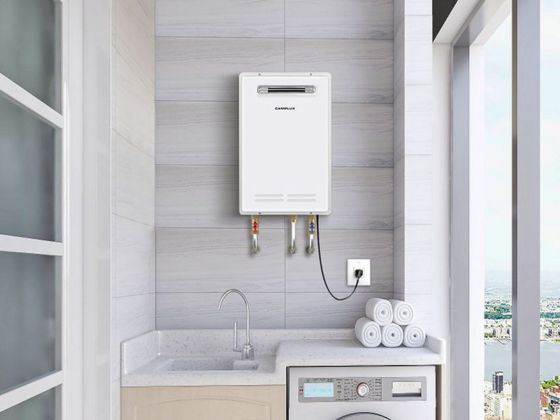
The Camplux BW158 is one of the most fuel-efficient units in the lineup at 1.58 GPM — its lower flow rate means the burner works less hard to reach comfortable temperatures, which extends canister life noticeably compared to higher-output units running at partial capacity.

The Camplux BW158 — lower flow rate means lower fuel consumption per shower. Ideal for solo campers watching their propane budget.
20 lb Propane Tank: The Real Camping Standard
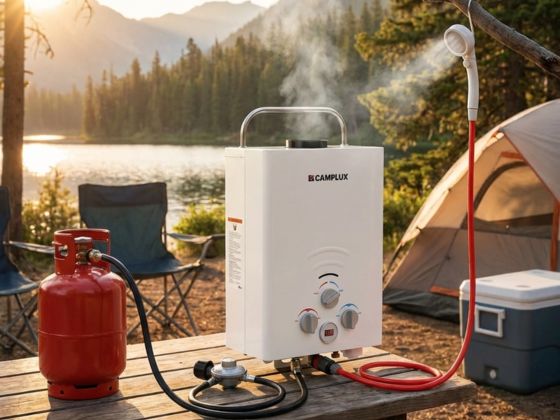
A 20 lb propane tank holds approximately 430,000 BTU of energy — roughly 20x a 1 lb canister. Here's what that looks like in practice:
- 40,000 BTU heater at 70% output: ~15 hours continuous use
- 50,000 BTU heater at 70% output: ~12 hours continuous use
For a family of four taking 5-minute showers once daily, that's 18–22 days of hot showers from a single 20 lb tank. For a couple doing longer showers and using hot water for dishes, expect 10–14 days.
A 20 lb tank costs roughly CAD $25–30 to fill at most Canadian Tire or U-Haul locations. On a per-shower basis, that works out to less than $1.50 — cheaper than most campground shower facilities, and infinitely more convenient.
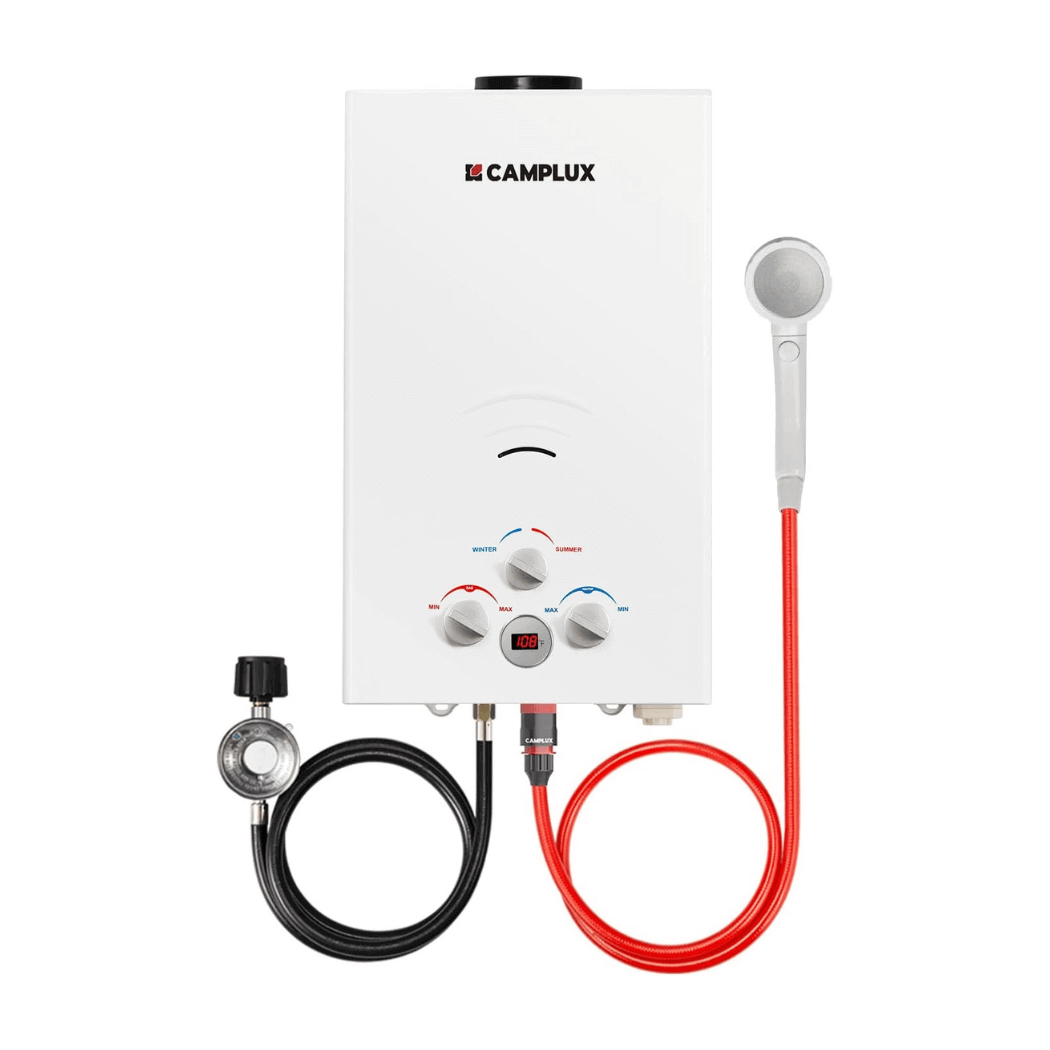
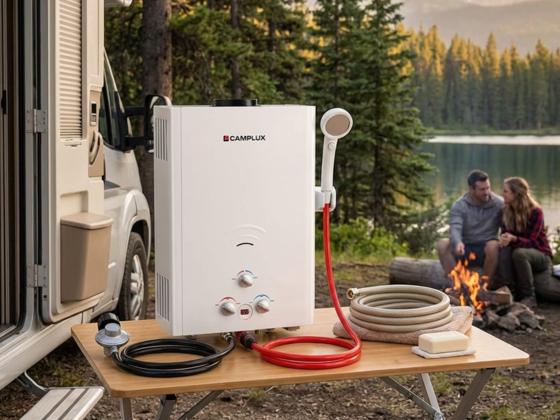
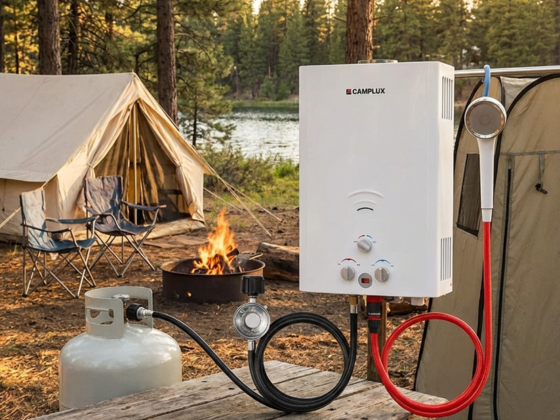
The Camplux BW264P120 comes bundled with a 3.3 GPM water pump and pipe strainer — everything you need for a complete off-grid shower setup that runs off a 20 lb tank. No sourcing compatible accessories separately.

The Camplux BW264P120 bundle — heater, pump, and strainer included. Designed for 20 lb tank use, no extra sourcing required.
Cold Weather Reduces Effective Tank Capacity
Here's something most propane guides skip: cold temperatures reduce the usable capacity of your propane tank, not because the fuel disappears, but because liquid propane vaporizes more slowly in cold conditions. Below -10°C, a standard 20 lb tank may only deliver 60–70% of its rated pressure, which affects burner performance and can cause the heater to modulate down or fail to ignite.
Practical implications for Canadian campers:
- Store your tank in your vehicle or tent vestibule overnight in cold conditions
- In sub-zero temperatures, a full tank performs better than a near-empty one (more liquid propane = more stable pressure)
- If ignition is inconsistent on cold mornings, low tank pressure is often the cause — not a heater fault
- Consider a tank insulating sleeve for late-season camping in northern Ontario, the Prairies, or high-altitude BC sites
We cover cold-weather ignition troubleshooting in more detail in our guide to portable water heaters for Canadian camping.
Altitude: The Other Variable Nobody Mentions
If you're camping in the Rockies, BC interior, or anywhere above 1,500m, expect a 5–10% reduction in effective BTU output from your propane heater. Combustion efficiency drops at altitude due to lower oxygen density. The heater still works — it just runs slightly less hot. For most camping scenarios this is a minor inconvenience. For shoulder-season trips at elevation with cold inlet water, it's worth factoring into your temperature expectations.
How to Calculate Propane for Your Specific Trip
Here's a simple formula you can use:
Daily propane use (lbs) = (Heater BTU × 0.70 × daily shower minutes) ÷ (21,600 × 60)
Example: 50,000 BTU heater, 70% efficiency, family of 4 taking 5-minute showers each (20 minutes total daily):
(50,000 × 0.70 × 20) ÷ (21,600 × 60) = 700,000 ÷ 1,296,000 = 0.54 lbs/day
A 20 lb tank lasts: 20 ÷ 0.54 = ~37 days of family showers.
Add 20–30% buffer for dish washing, gear rinsing, and cold-weather inefficiency, and you're looking at a realistic 25–30 days per tank for a family of four. For a week-long trip, one 20 lb tank is more than enough.
Which Tank Setup Is Right for Your Trip?
- Weekend solo trip (2–3 days): 1 lb canister is sufficient and convenient
- Weekend family trip (2–3 days): 1 lb canister works, bring a spare
- Week-long trip, any group size: 20 lb tank, no question
- Extended off-grid or cabin use: 20 lb tank, consider a second as backup
For the complete portable heater lineup organized by output and use case, the portable water heater collection is the fastest starting point. If you're also running a camping stove off propane, factor that consumption into your tank planning — the camping stove range gives you a sense of what additional BTU draw to expect.
And if you're moving toward a more permanent off-grid setup where propane portability matters less, the residential tankless water heater lineup is worth comparing — higher output, designed for fixed installation, and built for year-round Canadian use.

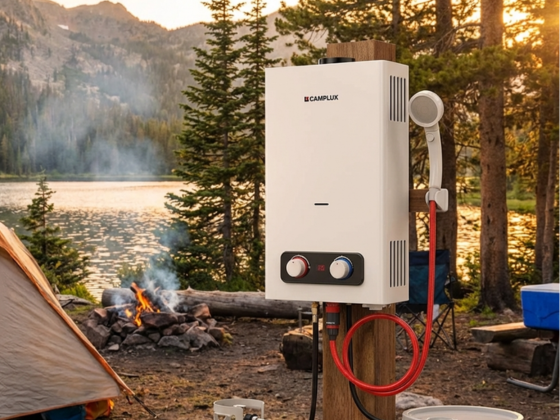
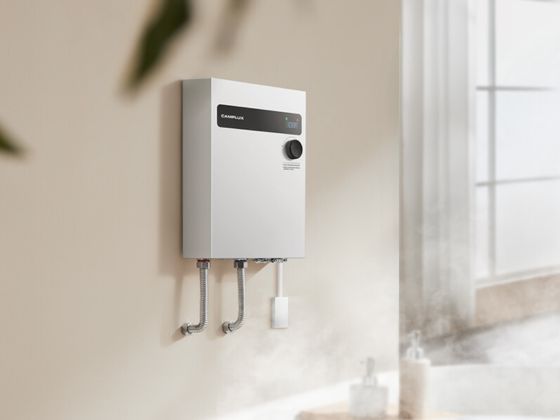
The Camplux BD158 — 1.5 GPM, lightweight, and efficient. A solid choice for solo campers prioritizing fuel economy over maximum output.
The Short Answer
A 1 lb canister gives you 30–45 minutes of heater run time. A 20 lb tank gives you 12–15 hours. For any trip longer than a weekend, bring a 20 lb tank. For a week-long family trip, one tank is plenty with room to spare.
The math isn't complicated once you have the numbers. And now you do.