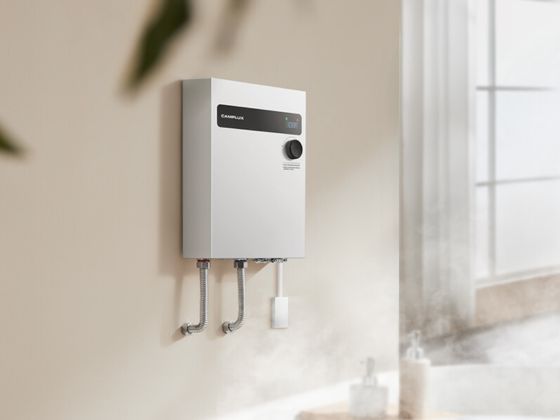

Canadian propane and electric camping water heater certifications directly shape which units are legal, safe, and insurable to use across the country. CSA certification (covering gas connections, operating limits, and fire risk) is the baseline standard for propane models, while NRCan's Minimum Energy Performance Standards govern electric units. Buying a non-certified heater isn't just a safety risk — it can void your insurance and violate provincial gas codes.
So you've narrowed it down to a propane portable or an electric tank, and now you're staring at a certification label wondering if it actually matters or if it's just marketing paperwork. Fair question — the answer depends on how and where you plan to use it.
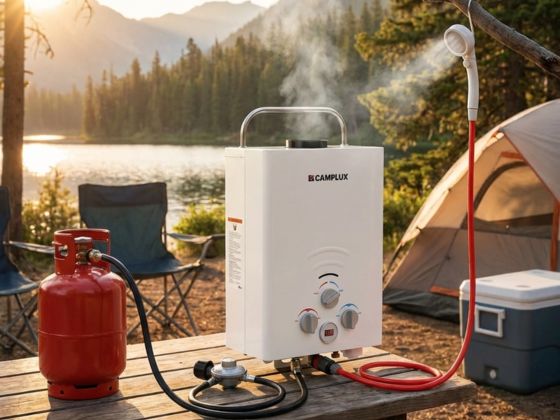
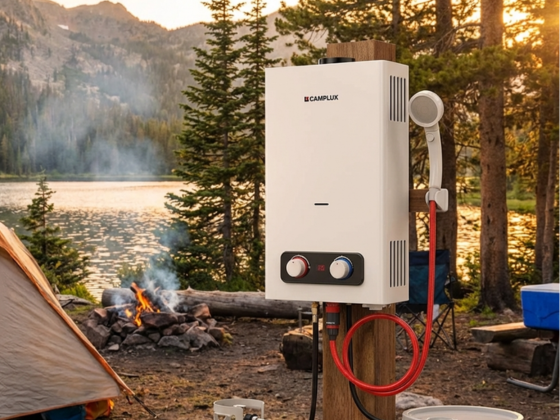
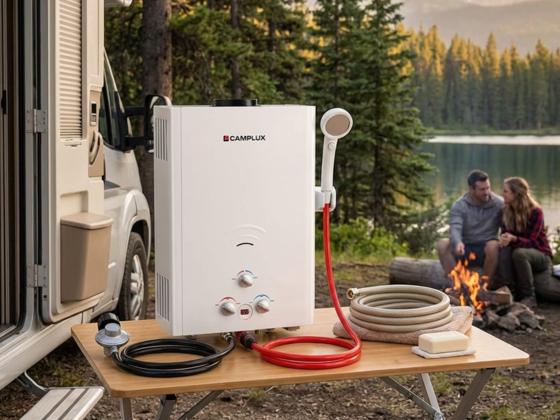
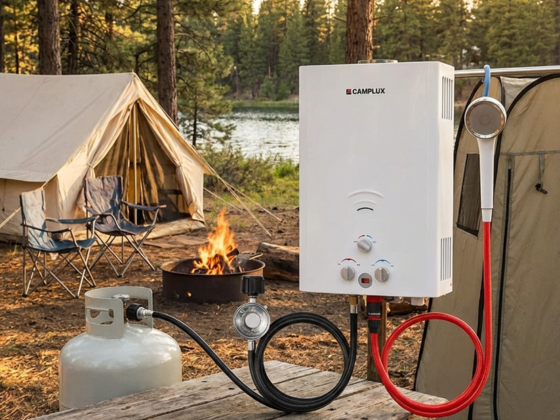
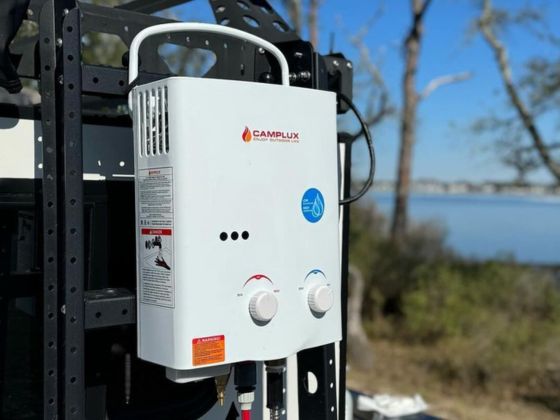
If you're camping in Ontario, British Columbia, or Quebec, provincial codes reference CSA standards directly. A unit without the right certification mark can be flagged at a campsite with electrical hookups, or refused by an RV service tech. The Camplux 5L 1.32 GPM Outdoor Portable Propane Tankless Water Heater carries CSA approval for both US and Canadian markets, which matters if you're crossing between provinces or heading stateside. And if you're leaning toward an electric setup, the Camplux Electric Mini Tank Water Heater 120V - 8 Gallon is worth a look for fixed seasonal setups.
Why Certifications Actually Matter in Canada
Certification isn't a checkbox. It's the difference between a unit that's been tested for cold-climate gas connections and one that hasn't. According to The Cabin Depot's tankless water heater selection guide, CSA tests gas connections, water connections, operating limitations across environments, and fire risk — then subjects the unit to failure-mode scenarios that manufacturers self-testing would never run. That's not a bureaucratic hurdle. That's real-world validation.
One risk worth checking: whether your campsite's insurance policy or your home policy covers damage from non-certified appliances. Many Canadian insurers won't pay out on a propane-related incident if the heater wasn't CSA-listed — and that's a gap a $50 savings on a grey-market unit won't come close to covering.
Buyers often wonder whether a CSA-certified unit actually performs differently from an uncertified one. In practice, the certification forces manufacturers to hit specific thresholds for flame failure devices, anti-freeze protection, and overheat shutoffs. The Camplux AY132 line, for example, carries CSA standard approval and includes flame failure protection plus anti-freezing safeguards — features that are required to pass testing, not optional add-ons. You can check the Camplux AY132G Portable Water Heater for the full spec breakdown.
The Canada Consumer Product Safety Act also gives federal teeth to certification requirements. Products that fail to meet applicable standards can be recalled or prohibited from sale. So when a retailer lists a CSA-approved heater, that approval is legally meaningful — not just a badge.
CSA vs ULC vs ENERGY STAR Canada: What Each Label Covers
Three certification bodies show up most often on Canadian camping water heaters. They cover different things, and mixing them up is easier than it should be.
CSA Group (Canadian Standards Association) handles gas appliance safety under standards like CSA B149.1, which covers natural gas and propane installations. For portable propane heaters, CSA certification means the unit passed tests for gas-tight connections, ignition safety, and operational limits in varied environments. This is the one you absolutely need for any propane unit used in Canada.
ULC (Underwriters Laboratories of Canada) focuses more on electrical and fire safety. For electric water heaters, ULC or equivalent electrical safety marks are what your electrician and your insurer will look for. The Camplux Whole House Electric Tankless Water Heater 24kW operates at a level where proper electrical certification is non-negotiable — a 24kW draw at 240V needs to meet Canadian electrical code requirements before a licensed electrician will connect it.
ENERGY STAR Canada is a separate program from US ENERGY STAR and carries different criteria, as Natural Resources Canada confirms. NRCan administers ENERGY STAR in Canada, and qualifying models must meet Minimum Energy Performance Standards set under the Energy Efficiency Act. For electric mini-tank heaters like the Camplux Electric Mini Tank 6.0 Gallon, energy efficiency ratings (expressed as Uniform Energy Factor, or UEF) determine both ENERGY STAR eligibility and long-term operating costs. Higher UEF = less electricity per litre of hot water delivered.
Propane vs Electric: How Certification Requirements Differ
Propane heaters and electric heaters go through fundamentally different certification paths. Propane units are regulated as gas appliances — the safety concerns are combustion, gas leaks, and carbon monoxide. Electric units are regulated as electrical appliances — the concerns are shock, overload, and fire from wiring faults. That split matters when you're comparing models.
For propane camping heaters, CSA certification under B149.1 is the Canadian standard to look for. The Camplux AY132P43 is a good example — CSA-approved, with a startup water pressure as low as 3.0 PSI, which is specifically useful for gravity-fed or pump-assisted off-grid setups. That low-pressure start is a spec that only passes CSA testing if the ignition and flame-detection systems are reliable at that operating threshold.
Electric camping heaters follow a different path. NRCan's MEPS under Canada's Energy Efficiency Regulations set minimum Uniform Energy Factor thresholds. The specific UEF requirement varies by tank size and draw pattern — confirm current figures in the manufacturer's spec sheet, since NRCan updates these periodically. What's stable: any electric water heater sold by a legitimate Canadian retailer must comply with current MEPS, and models that don't meet the threshold can't legally be imported or sold. The Camplux Electric Mini Tank 4.0 Gallon runs on standard 120V, which keeps it accessible without dedicated circuit requirements.
A common question is whether a propane unit bought in the US is valid for use in Canada. If it carries a CSA certification — not just UL — it should satisfy Canadian gas code. But read the label carefully. A UL-only mark with no CSA designation may not fly with provincial inspectors or insurance adjusters, even if the hardware looks identical.
Key Benefits of Buying a Certified Camping Water Heater
Certified units give you four practical advantages that uncertified models can't match. Start with insurance coverage — a CSA or ULC mark is often what separates a covered incident from an out-of-pocket one. Second, campsite and RV park acceptance. Many regulated sites won't allow propane appliances without visible certification marks. Third, resale value. A certified unit is easier to sell or transfer than a grey-market one with no traceable compliance history.
Fourth — and this one gets overlooked — warranty and customer support actually mean something. When a manufacturer submits a product for CSA testing, they're committing to a specific design. Changes that affect safety require re-certification. So the unit you bought is the unit that was tested. That traceability is what lets Camplux stand behind its products with a real warranty. If you're shopping for a portable propane option, the Camplux FIRST F5 Pro Portable Water Heater is a solid pick because it combines portability with the kind of build quality that supports a credible warranty claim if something goes wrong. View product details to check current warranty terms and availability.
Ease of setup is another benefit that flows directly from certification. Certified heaters must include clear installation instructions, appropriate regulators, and safety shutoffs. The Camplux BW158BP60 ships with pre-installed gas regulator and quick-connect fittings — that's not just convenient, it's a design requirement that comes with being a compliant product. You're not improvising connections in the field.
After testing several options, the pattern is clear: certified units arrive with complete accessory packages and standardized hose fittings. Uncertified imports often require adapters or substitutions that introduce the exact failure points the certification process was designed to eliminate.
Who Is This For?
If you're a weekend camper using a portable propane heater for outdoor showers at provincial parks in Ontario or BC, CSA certification is non-negotiable. Park staff do check, and some campgrounds in Alberta and Quebec have started requiring visible certification marks for any gas appliance. The Camplux BW264G fits this profile well — portable design, digital display for temperature control, and broad outdoor applicability including RV, boat, and campsite use.
For RV owners doing seasonal travel, an off-grid setup with a low-pressure start matters more than raw BTU output. The Camplux AY132BP43 handles 3.0 PSI startup and pairs with a 12V water pump — a complete system that works without municipal water pressure. CSA approval covers both Canadian and US markets, which matters if you're doing a cross-border trip.
Cottage owners who want a fixed point-of-use electric solution sit in a different category. They're more likely to care about UEF ratings and NRCan compliance than portability. The Electric Mini Tank Water Heaters Canada 2026 Buyer's Guide covers this segment in depth. For most cottage applications, a 6–8 gallon 120V unit under the sink handles a single tap without a dedicated circuit.
Buyers weighing certified options against cheaper uncertified imports are really trading short-term savings against insurance coverage, campsite access, and warranty support. Worth saying plainly. If you need a heater that works reliably at a Canadian campsite or RV park without friction, certification isn't optional.
How to Choose the Right Option
Start with fuel type and location. Propane is the practical choice for true off-grid use — no shore power required, works in remote sites across the Canadian Shield or the Rockies. Electric units are better suited to campsites with 30A or 50A hookups, or fixed cottage installations. The certification path follows from that choice: propane means you're looking for CSA B149.1 compliance; electric means you want to confirm NRCan MEPS compliance and check the UEF rating.
Flow rate is the next filter. For a single outdoor shower, 1.32–1.58 GPM is sufficient. For two simultaneous uses — say, a shower and a kitchen tap in an RV — you want 2.64 GPM or higher. The Camplux BW422G delivers 4.22 GPM at the high end, which covers a full RV bathroom setup. That flow rate comes with a higher propane consumption rate, so factor in tank size if you're going remote. For context on how certified propane models compare across the range, the Best Portable Propane Water Heaters for Off-Grid Canada 2026 breaks down the options by use case.
Quick tip: check your inlet water temperature before finalizing a flow-rate decision. Canadian groundwater in spring can run as low as 4°C in northern regions. A heater rated for 2.64 GPM at a 25°C rise will deliver noticeably less flow when the inlet is 4°C instead of 15°C. That's not a spec sheet failure — it's physics. Certified units will list their rated conditions; uncertified ones often won't.
If you prioritize ease of setup and don't want to manage a pump separately, look at complete kit options. If you prioritize maximum flow for multiple simultaneous outlets, the 16L propane models are the ones to compare. And if you're deciding between propane and electric purely on cost, the Affordable vs Premium Camping Water Heaters Canada 2026 article walks through the real-world cost difference over a season.
Side-by-Side: Certified Propane vs Electric Camping Water Heaters
The table below compares the two primary categories across the criteria that matter most for Canadian buyers. Prices reflect current Canadian retail from camplux.ca.
| Criterion | Propane Portable (e.g., Camplux AY132 / BW264G) | Electric Mini Tank (e.g., Camplux ME60 / ME80B) |
|---|---|---|
| Primary Certification | CSA (B149.1 gas appliance standard) | NRCan MEPS + ULC electrical safety |
| Off-Grid Capable | Yes — propane tank + battery ignition | No — requires 120V AC power |
| Flow Rate Range | 1.32 GPM to 4.22 GPM depending on model | Tank-based: no flow rate; capacity 1.3–18 gallons |
| Startup Water Pressure | As low as 3.0 PSI (AY132P43) | Standard municipal pressure required |
| Canadian Retail Price Range | C$199–C$590 (Camplux F5 to BW422G) | C$229–C$490 (ME10 to ME200B) |
| Best For | Remote camping, RV travel, off-grid showers | Seasonal cottage, RV with shore power, under-sink |
| Insurance Compliance | CSA mark required for most insurer acceptance | NRCan compliance + ULC mark required |
| Setup Complexity | 5 minutes with included accessories | Plug-in (120V) or hardwired depending on model |
| Provincial Code Acceptance | CSA-certified units accepted across all provinces | Must meet provincial electrical code (CEC) |
A second comparison, focused specifically on popular Camplux propane models for Canadian camping use:
| Model | Flow Rate | Certification | Min. Water Pressure | Price (CAD) | Best Fit |
|---|---|---|---|---|---|
| AY132 | 1.32 GPM | CSA Approved | Standard | $239.99 | Solo campers, light outdoor shower |
| AY132P43 | 1.32 GPM | CSA Approved | 3.0 PSI | $299.99 | Off-grid RV, gravity feed, no municipal water |
| BW264G | 2.64 GPM | CSA Approved | Standard | $369.99 | Couples, RV shower + kitchen |
| BW422G | 4.22 GPM | CSA Approved | Standard | $539.99 | Full RV bathroom, multiple simultaneous outlets |
| Nano 3 Max | Verify spec sheet | Verify current listing | Verify spec sheet | $589.99 | Advanced control, real-time display, 50–122°F range |
If you prioritize off-grid independence, a CSA-certified propane unit with low-pressure startup fits best. If you prioritize energy efficiency at a fixed cottage, a NRCan-compliant electric mini tank fits better. Neither wins every criterion — the right call depends on your power access and use frequency.
For a broader look at how the top-rated propane options stack up for backcountry use, the Top Camping Water Heaters for Canadian Wilderness 2026 covers terrain-specific considerations that most spec-comparison articles skip. And if timing your purchase around pricing cycles matters to you, the Best Times to Buy Tankless Water Heaters Canada 2026 is worth reading before you check out.
Provincial Code Variations You Should Know
Canada doesn't have a single national installation code for gas appliances — provinces adopt and amend the National Model Codes independently. Ontario's Ontario Building Code, BC's Gas Safety Regulation, and Quebec's Construction Code all reference CSA B149.1 as the baseline for gas appliance installations, but each province can add requirements on top. In practice, for portable camping heaters used outdoors, the CSA mark on the product is what matters most. Fixed installations inside an RV or cottage require compliance with the provincial code in force where the installation happens.
Quebec deserves a specific mention. The Régie du bâtiment du Québec (RBQ) enforces gas installation standards and has historically been thorough about appliance compliance documentation. If you're setting up a semi-permanent propane hot water system at a Quebec chalet, having the CSA B149.1-compliant unit isn't optional — and it's worth keeping the paperwork somewhere you can actually find it.
BC's Electrical Safety Act and Gas Safety Regulation are enforced by Technical Safety BC. For electric water heaters installed in a fixed location — including a seasonal cabin — you may need a permit and inspection. A 120V plug-in unit like the Camplux Electric Mini Tank 2.5 Gallon falls into a lower-risk category than hardwired units, but confirming with Technical Safety BC before installation is the right move. Permit requirements vary by installation type, not just product type.
Alberta and Saskatchewan generally follow the same CSA B149.1 reference for gas appliances. For buyers heading into remote Alberta or Saskatchewan campsites, the combination of CSA-certified propane heater plus a Camplux 12V Water Pump gives you a fully self-contained system that meets the applicable code without needing shore power or municipal supply. If you're comparing options in this range, Compare options between the leading certified portable propane heaters available in Canada.
Frequently Asked Questions
Does CSA certification cover both propane and natural gas camping heaters?
CSA B149.1 covers both propane and natural gas appliance installations in Canada. However, a unit certified for one fuel type isn't automatically approved for the other — the certification is fuel-specific. Portable camping heaters are almost universally propane-only, so verify the listed fuel type on the certification mark before purchasing a unit you intend to connect to a different gas source.
Can I use a US-purchased propane water heater legally at Canadian campsites?
It depends on the certification mark on the unit. If the product carries a CSA mark (not just a UL mark), it was tested to standards that satisfy Canadian gas codes and is generally accepted across Canadian provinces. A UL-only mark without CSA may not satisfy provincial gas inspectors or your insurer, even if the product is physically identical to a CSA-certified version. Always check the label before crossing the border with a propane appliance.
What is UEF and why does it matter for electric camping water heaters in Canada?
UEF stands for Uniform Energy Factor — the standard metric used by NRCan to measure how efficiently an electric water heater converts electricity into hot water delivered at the tap. A higher UEF means lower operating cost per litre of hot water. NRCan's MEPS set a floor UEF that all new electric water heaters sold in Canada must meet or exceed. The exact threshold varies by tank size and draw pattern, so check the manufacturer's spec sheet for the model you're considering and cross-reference with NRCan's published standards if you're comparing efficiency claims between brands.
Do portable camping water heaters need to be certified if I only use them on private property?
Technically, insurance requirements and provincial gas safety regulations apply regardless of whether you're on private or public land. Most home and property insurance policies in Canada require that gas appliances meet applicable CSA standards to remain covered. On private rural property without inspections, enforcement is rare — but if a propane incident occurs and your insurer discovers a non-certified appliance was involved, your claim can be denied. The risk-reward calculation strongly favours buying certified from the start.
How do I verify a water heater's CSA certification is current and not fraudulent?
CSA Group maintains a publicly searchable certification directory at csagroup.org where you can look up a product by manufacturer name or certification number. The certification mark on the unit should include the CSA logo plus the applicable standard number. If a seller claims CSA certification but the product doesn't appear in the CSA directory, treat that as a red flag. Reputable Canadian retailers like camplux.ca list certifications in product descriptions, and Camplux models like the AY132 series reference their CSA approval directly in product listings.
Is ENERGY STAR Canada certification the same as ENERGY STAR in the US?
No — and this trips up a lot of cross-border buyers. ENERGY STAR Canada is administered by NRCan and uses Canadian-specific efficiency thresholds that can differ from the US EPA's ENERGY STAR criteria. A product certified under US ENERGY STAR is not automatically eligible for the Canadian designation. If you're purchasing an electric water heater partly for a potential rebate from a provincial utility program, confirm the unit holds ENERGY STAR Canada certification specifically — some provincial rebate programs require the Canadian designation, not the US one.