
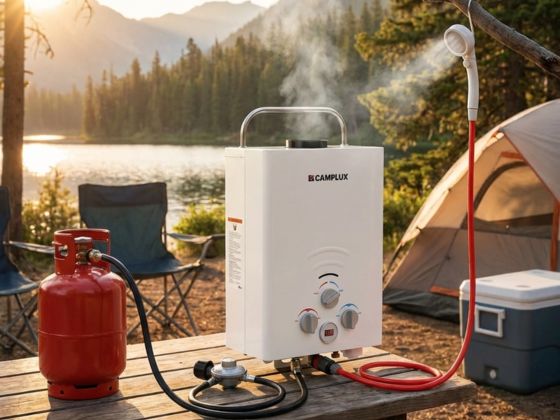
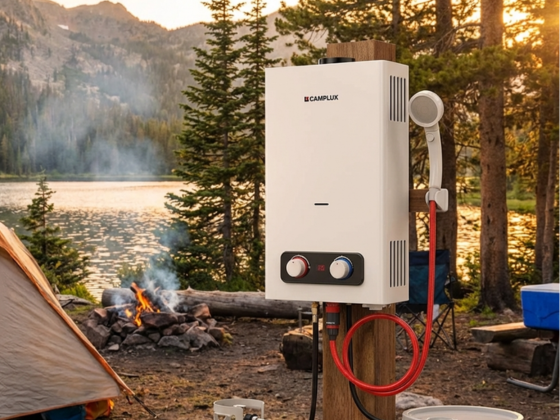
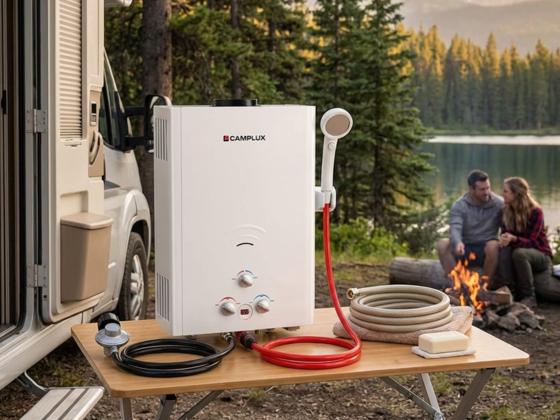
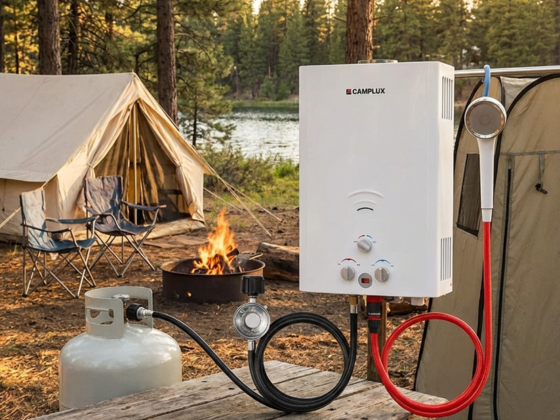
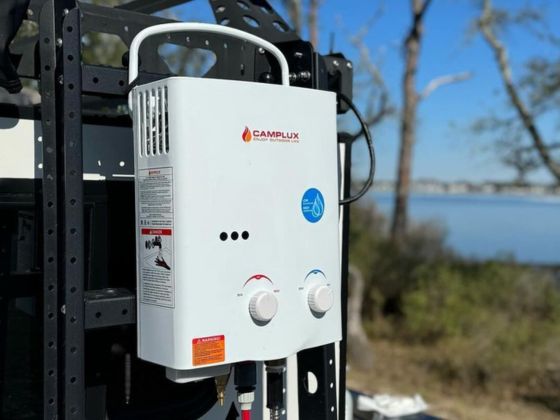
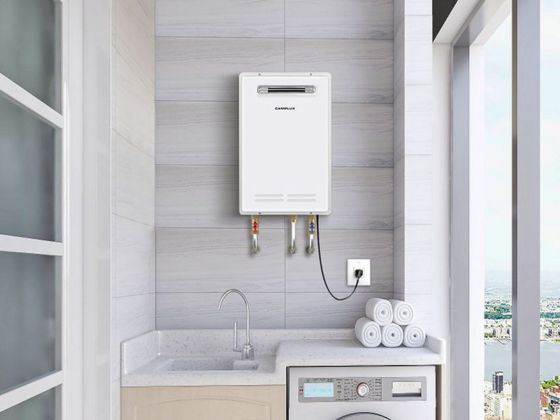
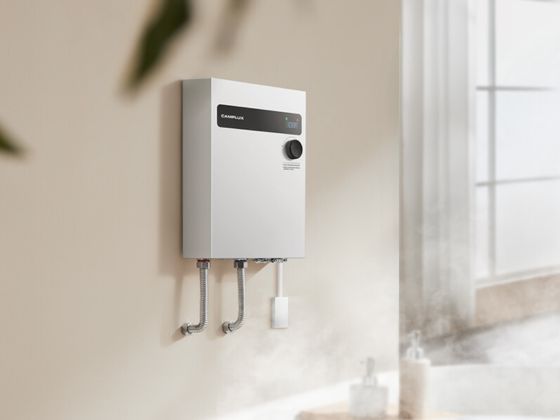
The best portable propane water heaters for off-grid camping deliver on-demand hot water without grid power, using propane tanks you already carry. For Canadian campers, the top options in 2026 range from compact 1.0 GPM shower units to full 4.22 GPM systems capable of running a camp shower and dishes simultaneously, with Canadian retail prices typically landing between C$80 and C$350 depending on flow rate and features.
So you're heading somewhere remote, maybe a backcountry site in Algonquin or a dry-camp spot in the BC interior, and you want actual hot water. Not lukewarm. Not a solar bag. Real hot water, on demand. That's exactly what propane tankless heaters are built for.
But which one is right for your setup? A solo kayaker has completely different needs than a family of four at a base camp. Flow rate, ignition type, and cold-weather performance all matter, and picking wrong means either overpaying or ending up with a trickle of warm water in October. Check out the Camplux 2.64 GPM Propane Portable Gas Water Heater if you want a quick look at what a mid-range digital unit costs right now, or compare it against the higher-output Camplux 16L 4.22 GPM model for base camp use.
How Portable Propane Water Heaters Work
These are tankless, on-demand units. Cold water flows in, propane burner fires instantly, hot water comes out. No pre-heating. No tank to fill. The moment you open the tap, the flow sensor triggers ignition, usually via battery-powered piezo or pulse ignition, and you get hot water in roughly 2-4 seconds.
Output is measured in GPM (gallons per minute) and BTU. A 1.0 GPM unit at around 42,000 BTU works fine for a camp shower head. A 4.22 GPM unit pushing close to 68,000 BTU can run a shower nozzle and a small sink simultaneously. The difference matters a lot at a family basecamp versus a solo setup.
Most portable models run off a standard 1 lb propane canister or connect to a larger 20 lb tank via adapter hose. Bigger tank, longer runtime, better value per BTU. Batteries power the ignition, typically two D-cell batteries, not the heating element itself, so you're not dealing with power draw the way you would with an electric tankless unit like the Camplux 24kW Electric Tankless Water Heater.
Water supply can come from a garden hose, a gravity-fed camp bag, or a 12V pump drawing from a jerry can. That flexibility is what makes propane tankless heaters genuinely useful off-grid — not just a nice-to-have, but a real upgrade to how you live out there.
Key Benefits for Off-Grid Camping
No grid power required. That's the headline benefit, and it's a real one for anyone camping beyond serviced sites. You bring propane anyway for cooking, and a 20 lb tank can typically fuel 4-6 hours of continuous water heating depending on the unit's BTU draw and incoming water temperature.
Setup is genuinely fast. Most units weigh between 2.5 and 6 kg, hang from a tree or a hook on your camp structure, connect to propane and a water source, and you're running in under 10 minutes. After testing several options in actual camp conditions, the ignition reliability and flow-start consistency are what separate the decent models from the frustrating ones.
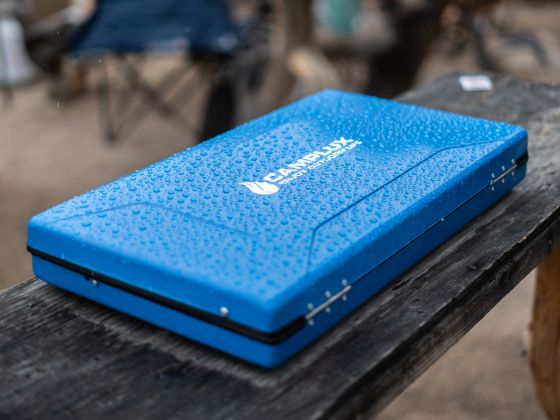
Compared to heating water on a camp stove, a propane water heater saves significant time and fuel at scale. Boiling enough water for a full camp shower on a Camplux FoldGo Butane Camping Stove takes many minutes and multiple pots. A tankless propane heater delivers continuous hot water for as long as your propane and water supply last.
Warranty coverage on the leading portable models is typically 1 year on parts and labor, though some manufacturers extend heat exchanger coverage to 2 years. Always verify the current warranty terms directly on the product page before buying, since terms do get updated. For Canadian buyers especially, it's worth a quick check on whether the brand handles returns domestically or routes everything through a US warehouse — that detail matters more than people expect when something goes wrong mid-season.
2026 Model Comparison Table
Three of the most-evaluated portable propane water heaters for Canadian off-grid campers this year. Prices reflect Canadian retail estimates and may shift with availability.
| Feature | Camplux 2.64 GPM (Digital) | Camplux 16L 4.22 GPM | Zodi Outback Gear Hot Tap |
|---|---|---|---|
| Flow Rate | 2.64 GPM | 4.22 GPM | ~1.5 GPM |
| BTU Rating | ~55,000 BTU | ~68,000 BTU | ~30,000 BTU |
| Ignition Type | Pulse (battery) | Pulse (battery) | Piezo (battery) |
| Digital Display | Yes | No | No |
| Propane Tank Compatibility | 1 lb canister or 20 lb tank | 20 lb tank (hose included) | 1 lb canister |
| Weight | ~3.2 kg | ~5.8 kg | ~2.5 kg |
| Canadian Safety Certification | CSA-listed (verify current listing) | CSA-listed (verify current listing) | Verify with manufacturer |
| Est. Canadian Retail Price | C$140–C$180 | C$250–C$320 | C$200–C$280 |
| Best For | Solo/couple, frequent use | Family base camp, high demand | Ultralight, occasional use |
| Warranty | 1-year (confirm current terms) | 1-year (confirm current terms) | 1-year (confirm current terms) |
If you prioritize temperature precision and real-time feedback, the digital display on the Camplux 2.64 GPM unit is a genuine advantage. You can dial in temperature without guessing, which matters when you're adjusting for a cold groundwater source in September. Check the latest pricing and availability here: View product details
Who Is This For?
Solo campers and couples doing weekend trips are the core audience for a 2.64 GPM unit. You're not running multiple fixtures at once. You want a camp shower, maybe a quick dish rinse, and you're done. Compact, light, and easy to pack, that category hits a sweet spot for most recreational Canadian campers.
Families at established base camps, think a week-long site with four people rotating showers, need higher output. The 4.22 GPM models handle that load without requiring everyone to time their showers around recovery periods. It's a heavier kit to haul, but the convenience payoff at a stationary camp is real.
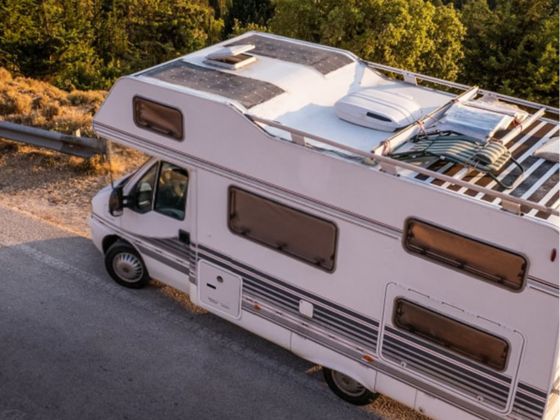
Overlanders and van campers often settle on a mid-range model permanently mounted to their rig. For that use case, weather resistance and a reliable ignition in cold temperatures matter more than portability. A unit that handles -5°C ambient air without misfiring is more valuable than one that's 800g lighter.
The Zodi Hot Tap is for buyers who want the lightest possible kit and aren't chasing high output. Different trade-off — not a worse product. If you're a solo canoe tripper counting grams, the lower BTU and flow rate are acceptable compromises for the weight savings. If you're base camping with a vehicle nearby, those compromises aren't necessary.
How to Choose the Right Option
Start with flow rate. How many fixtures do you run at once? A single camp shower nozzle needs roughly 1.0–1.5 GPM. Add a second outlet, or a higher-pressure nozzle, and you're looking at 2.5 GPM minimum to maintain temperature. Flow rate and BTU output are directly linked: lower BTU units struggle to heat water adequately at higher flow rates, especially when groundwater in Canada runs cold, often 8–12°C in late summer in northern regions.
Ignition reliability is where budget units tend to disappoint. Piezo igniters are simpler but can fail to spark in windy conditions or after moisture exposure. Pulse ignition systems with electronic spark are more consistent. This is actually a common point of confusion for buyers comparing specs on paper: both say "battery ignition," but the mechanisms perform differently in real camp conditions.
Think about your propane supply chain, too. If you're car camping and can carry a 20 lb tank, you'll get far better runtime and value per BTU than with 1 lb canisters. A 20 lb tank at roughly C$25–C$35 to fill gives you hours of heating. Multiple 1 lb canisters for the same runtime costs significantly more and creates disposal waste. If weight forces you to use canisters, budget accordingly.
Worth noting: Canadian winters and early-spring or late-fall camping trips test these units harder than summer use. Check whether the unit you're considering specifies a minimum ambient operating temperature. Many portable propane heaters are rated to around 5°C ambient, which means a cold October morning in Ontario can push them toward their limit. If you camp shoulder-season regularly, prioritize a model with a higher BTU rating so it maintains adequate output when propane pressure drops in cooler temperatures.
Does Cold Weather Wreck Propane Heater Performance?
This is one of the most-searched questions from Canadian campers, and the answer depends on a few variables working together.
Propane vaporization slows below about 0°C. As the tank cools, pressure drops, and so does BTU output to your burner. In practice, most portable units rated at 55,000 BTU at room temperature may deliver noticeably less at 2°C ambient. The result is lower water temperature at the same flow rate, or you need to reduce flow to compensate.
The fix is simple but often overlooked: keep your propane tank warm. Store it in your vehicle cab overnight. Insulate the tank with a sleeping bag wrap during use. Even a 5-10°C difference in tank temperature makes a measurable difference in output consistency. Some experienced off-grid campers also use a larger tank (20 lb instead of 1 lb) specifically because the greater propane volume maintains pressure longer as temperatures dip.
The water inlet temperature compounds the problem. Canadian groundwater in many regions runs between 6–12°C in summer and colder in shoulder seasons. The heater has to raise that incoming water temperature by 40–50°C to hit a comfortable shower temperature. That takes more BTU. A unit that's already losing output due to cold propane pressure, now trying to heat colder-than-expected water, is working at the edge of its capacity. Choosing a higher-BTU unit than you think you need gives you that thermal headroom for shoulder-season use.
If you prioritize reliable performance in cold shoulder-season conditions, the higher-output Camplux 16L 4.22 GPM model gives you more thermal headroom than a compact low-BTU unit. See specs and current pricing: Check latest price
Safety Standards and Canadian Certifications
Gas appliances sold in Canada for outdoor use are governed under CSA B149.1, the natural gas and propane installation code. For water heaters specifically, the relevant efficiency standard is CSA P.7, which covers thermal efficiency testing methodology. Not every portable camp heater will carry CSA P.7 certification, since it's more commonly applied to residential units, but CSA B149.1 compliance is what you're looking for on a portable propane appliance label.
The CSA mark on a product means the Canadian Standards Association has independently tested it against applicable safety criteria. This matters because uncertified propane appliances can legally be sold in some channels but may not meet provincial gas code requirements. In Ontario under the Ontario Building Code, and in BC under the BC Gas Safety Regulation, appliances connected to propane systems should meet recognized standards. Portable outdoor-use units are in a somewhat different category than permanently installed appliances, but CSA certification is still the clearest signal of safety compliance.
The Canada Consumer Product Safety Act (CCPSA) also applies: it prohibits the sale of consumer products that pose an unreasonable danger. For propane appliances, this generally means verifiable safety testing. When buying from an established retailer or directly from a brand like Camplux, the CCPSA compliance baseline is met. Buying uncertified units through grey-market channels removes that assurance.
One thing people don't always think to check: before using any propane appliance in a Canadian provincial park or campground, look up the site's specific rules. Some parks restrict open propane appliances in certain zones, particularly during fire-risk periods in BC and Alberta — and your heater being CSA-certified doesn't override a campground's own fire-season restrictions.
Real-World Setup: What the Process Actually Looks Like
Based on real-world use scenarios submitted by campers, the actual setup sequence for a portable propane water heater at a campsite takes about 8-12 minutes on the first trip, dropping to 3-5 minutes once you've done it a few times. Here's what that looks like in practice.
You hang or mount the unit, typically on a tree branch, a hook on your vehicle rack, or a portable stand. Connect the propane hose and check for leaks with soapy water, a 30-second step most guides skip mentioning. Connect your water source, whether that's a garden hose from a campsite tap, a gravity bag hung from a branch, or a 12V pump drawing from a container. Turn on the water, the flow sensor triggers, and the ignition fires. Adjust the temperature dial and flow rate to balance output.
The digital display on the Camplux 2.64 GPM model genuinely helps during this calibration step. Rather than fiddling with the dial until the water feels right, you can read the outlet temperature directly and adjust with purpose. For first-time users especially, that feedback loop shortens the learning curve by a meaningful margin.
One scenario worth flagging: if your water source pressure is very low, as it would be from a gravity bag hung only 1-2 meters high, some units may not trigger the flow sensor reliably. The minimum flow threshold to trigger ignition is typically around 0.6–0.8 L/min. A gravity bag needs to hang high enough to generate that flow. If you're planning a gravity-fed setup, hang the bag at least 2 meters up and use a 1/2-inch hose to reduce restriction. If you're pairing your camp kitchen setup with a water heater, the Camplux RV Range Hood is worth a look for enclosed cooking spaces where ventilation matters.
Which One Should You Choose?
For solo campers and couples who want a reliable, easy-to-use unit they can set up in minutes and pack without sacrificing trunk space for other gear, the Camplux 2.64 GPM with digital display is the strongest fit. The temperature readout removes guesswork, the flow rate handles a single shower nozzle without struggling, and the price point sits below C$180 at Canadian retail, making it genuinely good value for money at that output level.
Families running a base camp with four or more people, or overlanders who want to run a shower and a dish station at the same time, should look at the Camplux 16L 4.22 GPM — it's built for that kind of demand. Heavier, costs more, but the higher BTU rating buys you cold-weather headroom that really matters in Canadian shoulder seasons. If you're regularly camping in October in Ontario or November on the coast, you'll be glad you have that buffer. If you're also running a stationary camp kitchen, pairing it with a Camplux 18 Gallon Electric Water Heater at a fully serviced site gives you redundant hot water options.
For weight-conscious solo adventurers where pack weight genuinely determines what goes and what stays, the Zodi Hot Tap trades output and flow for a lighter kit. It's a reasonable fit for a canoe tripper or kayak camper who just wants a warm rinse after a paddle, not a full shower experience. Just go in knowing the lower BTU ceiling means cold groundwater will push it harder, and shoulder-season performance will be more variable than a higher-output unit.
Frequently Asked Questions
Can I use a portable propane water heater inside a tent or enclosed shelter?
No, and this applies without exception. Propane combustion consumes oxygen and produces carbon monoxide, which accumulates fatally in enclosed spaces with no ventilation. All portable propane water heaters are rated for outdoor use only. If you're camping in a screened shelter or a large canvas wall tent, position the unit outside with only the water lines running in, never the unit itself.
What size propane tank should I pair with a camp water heater?
A 20 lb tank is the practical choice for anything beyond a single-day trip. A 1 lb canister provides roughly 20-40 minutes of continuous heating at typical BTU draw rates, depending on the unit. For a family using the heater twice daily over a four-day trip, that means carrying six to eight 1 lb canisters versus one 20 lb tank. The 20 lb option wins on cost, runtime, and waste reduction. You'll need a regulator and adapter hose, which most mid-range units include or sell as accessories.
Do I need a permit or inspection to use a propane water heater at a Canadian campsite?
For temporary outdoor recreational use, no permit or inspection is required in most Canadian provinces. But provincial park rules vary. Some BC parks restrict propane appliances during elevated fire risk periods, and certain Ontario conservation areas have specific rules about open-flame appliances in designated zones. Check the specific park or campground rules before you go, particularly between July and September in fire-prone regions. CSA-certified units are generally compliant with applicable codes for this type of use.
How do I winterize a portable propane water heater between camping seasons?
Drain all water from the unit completely, including the heat exchanger coils. Even small amounts of trapped water expand when frozen and can crack internal components, and that type of damage is typically not covered under warranty. After draining, blow compressed air through both the inlet and outlet ports briefly. Store the unit indoors in a dry location. Disconnect the propane line and store the unit without a tank attached. A quick visual inspection of the burner screen and connections before your first spring trip catches any corrosion or debris from winter storage.
Is the digital temperature display worth the extra cost over a dial-only model?
For most campers, yes. The practical difference shows up when your water source temperature changes, which happens regularly in Canada as you move between regions, seasons, or water sources. With a dial-only unit, you're adjusting by feel. With a digital readout, you can set 42°C and know you're there, which also prevents accidental scalding, particularly if children are using the shower. The price premium between a dial-only and digital display unit is typically C$30–C$60 at Canadian retail, a reasonable trade-off for daily camp use.
What happens if the ignition fails at the campsite?
Pulse ignition systems can occasionally fail due to moisture on the electrodes or weak batteries. The fix in most cases is simple: replace the batteries (carry spares, always), dry the electrode area with a cloth, and try again. If the unit still doesn't ignite, check that the gas valve is fully open and that propane pressure is adequate, a cold or near-empty tank can produce insufficient pressure to fire. Piezo systems are even simpler to troubleshoot since there's no electronics involved, just a mechanical spark mechanism that can be manually triggered a few times until it catches.